

SU Carburetor: The Definitive Guide for Classic Car Enthusiasts
 Are you a classic car enthusiast looking to improve the performance of your vehicle? Then you might want to consider the SU carburetor, a popular choice for vintage cars. In this article, we will explore the history, mechanics, advantages, and drawbacks of the SU carburetor, as well as tips for maintenance and troubleshooting.
Table of Contents
- Introduction
- What is an SU carburetor?
- History of the SU carburetor
- How does an SU carburetor work?
- Advantages of the SU carburetor
- Disadvantages of the SU carburetor
- Types of SU carburetors
- How to identify an SU carburetor
- How to install an SU carburetor
- How to tune an SU carburetor
- Maintenance tips for SU carburetors
- Troubleshooting common problems with SU carburetors
- SU carburetors vs. other carburetors
- Frequently Asked Questions
- Conclusion
1. Introduction
Carburetors are an essential component of any internal combustion engine, responsible for mixing fuel and air to create a combustible mixture that powers the engine. The SU carburetor is a type of carburetor that has gained popularity among classic car enthusiasts due to its simplicity, reliability, and performance.
In this article, we will provide an in-depth guide to the SU carburetor, covering its history, mechanics, advantages, and disadvantages, as well as tips for installation, tuning, maintenance, and troubleshooting.
2. What is an SU carburetor?
An SU carburetor is a type of variable choke carburetor that uses a piston instead of a butterfly valve to control the flow of air. The SU carburetor was invented by George Herbert Skinner in 1905 and was first used on a production car in 1922. The name SU stands for Skinners Union, the company that originally produced the carburetor.
3. History of the SU carburetor
The SU carburetor has a long and fascinating history that spans over a century. The carburetor was first invented by George Herbert Skinner in 1905 and was initially used on motorcycles. In 1922, the first production car to use an SU carburetor was the Humber 8.
Over the years, the SU carburetor gained a reputation for simplicity, reliability, and performance, and it became a popular choice for many car manufacturers, including MG, Triumph, and Austin-Healey. In the 1950s and 1960s, the SU carburetor was also used in high-performance cars, such as the Jaguar XK and the Aston Martin DB5.
4. How does an SU carburetor work?
The SU carburetor operates on the principle of suction, where the vacuum created by the engine's intake stroke pulls the fuel and air mixture into the combustion chamber. The SU carburetor uses a piston instead of a butterfly valve to control the flow of air, making it more responsive and efficient.
When the engine is at idle, the piston is held down by a spring, which restricts the flow of air and fuel. As the throttle is opened, the piston rises, allowing more air and fuel to enter the engine. The carburetor also has a variable venturi, which adjusts the size of the opening based on the engine's needs.

5. Advantages of the SU carburetor
One of the main advantages of the SU carburetor is its simplicity.
Another advantage of the SU carburetor is its efficiency. Because it uses a piston to control the flow of air, rather than a butterfly valve, it can respond more quickly to changes in engine speed and load. This means that the engine can achieve better fuel economy, acceleration, and overall performance.
The SU carburetor is also relatively easy to tune and maintain. It has fewer moving parts than other types of carburetors, making it less prone to wear and tear. The carburetor's design also allows for easy access to the float chamber and other components, making it simple to clean and adjust.
6. Disadvantages of the SU carburetor
One of the main disadvantages of the SU carburetor is its sensitivity to altitude changes. Because the carburetor relies on engine suction to draw in air, changes in atmospheric pressure at high altitudes can affect its performance. However, this issue can be mitigated by adjusting the carburetor's jetting or installing an altitude-compensating device.
Another disadvantage of the SU carburetor is its limited capacity for high airflow. While the carburetor is highly efficient at low and mid-range speeds, it may not be suitable for high-performance engines that require a large volume of air.
7. Types of SU carburetors
There are several different types of SU carburetors, each with its own unique design and features. Some of the most common types include:
- H-type: This is the original type of SU carburetor, with a horizontal piston and a fixed jet. It was used on many classic cars from the 1920s to the 1960s.
- HS-type: This is a later version of the H-type carburetor, with a vertical piston and a variable jet. It was used on many high-performance cars from the 1950s to the 1970s.
- HD-type: This is a larger version of the HS-type carburetor, designed for use on larger engines. It has a larger float chamber and a larger bore size.
- HIF-type: This is a more modern version of the HS-type carburetor, with an integrated float chamber and a different design for the throttle and choke mechanisms.
8. How to identify an SU carburetor
If you're not sure whether your car has an SU carburetor or not, there are a few ways to identify it. One way is to look for the "SU" logo on the carburetor body or the air filter housing. Another way is to check the size and shape of the carburetor, as well as the type of piston and jet.
9. How to install an SU carburetor
Installing an SU carburetor can be a relatively simple process, but it does require some basic mechanical knowledge and tools. Here are the basic steps for installing an SU carburetor:
- Remove the old carburetor and intake manifold.
- Install the new intake manifold, gaskets, and mounting hardware.
- Install the new carburetor, making sure to align it properly with the intake manifold and throttle linkage.
- Connect the fuel lines and vacuum lines.
- Adjust the carburetor's idle speed and mixture settings.
10. How to tune an SU carburetor
Tuning an SU carburetor requires a bit of trial and error, as well as some basic knowledge of carburetor mechanics. Here are the basic steps for tuning an SU carburetor:
- Start by adjusting the idle speed and mixture settings.
- Test the carburetor's performance at different engine speeds and loads.
- Make small adjustments to the carburetor's jetting and throttle linkage as needed to achieve the desired performance.
It's important to note that tuning an SU carburetor is not a one-time process. The carburetor's performance may change over time due to wear and tear, changes in atmospheric conditions, or other factors. Regular tuning and maintenance can help ensure that your carburetor is functioning at its best.
11. Maintenance tips for SU carburetors
Like any other mechanical component, an SU carburetor requires regular maintenance to ensure optimal performance and longevity. Here are some tips for maintaining your SU carburetor:
- Clean the carburetor periodically to remove dirt, debris, and other contaminants that can clog the jets and passages.
- Check the float level regularly to ensure that the carburetor is delivering the correct fuel-air mixture.
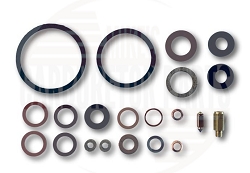
- Inspect the carburetor gaskets and seals for signs of wear or damage, and replace them as needed.
- Lubricate the carburetor's moving parts with a light oil to prevent corrosion and wear.
12. Troubleshooting common problems with SU carburetors
Even with proper maintenance, SU carburetors can sometimes develop problems. Here are some common issues to look out for and how to troubleshoot them:
- Hard starting: This could be caused by a variety of factors, such as a clogged fuel filter, a weak battery, or a faulty ignition system. Check these components first before assuming that the carburetor is the problem.
- Rich or lean running: If the engine is running too rich or too lean, it could be a sign that the carburetor is not delivering the correct fuel-air mixture. Check the float level and jetting settings and adjust them as needed.
- Stalling or hesitation: This could be caused by a clogged jet or passage in the carburetor. Try cleaning the carburetor to remove any dirt or debris that could be causing the problem.
13. SU carburetors vs. other carburetors
While the SU carburetor has many advantages over other types of carburetors, it may not be the best choice for every application. Here are some factors to consider when comparing SU carburetors to other carburetors:
- Performance: The SU carburetor is known for its responsiveness and efficiency at low and mid-range speeds. However, other carburetors, such as the Weber or the Dell'Orto, may be better suited for high-performance applications.
- Availability: While SU carburetors are still available today, they may be more difficult to find than other carburetors. This can make them more expensive or time-consuming to replace or repair.
- Compatibility: Not all engines are compatible with SU carburetors. Before installing an SU carburetor, make sure that it is the correct size and type for your engine.
14. Frequently Asked Questions
- Are SU carburetors difficult to tune?
- Tuning an SU carburetor requires some basic mechanical knowledge and tools, but it is not overly difficult. With some practice and patience, you can achieve the desired performance from your carburetor.
- How often should I clean my SU carburetor?
- It's a good idea to clean your SU carburetor periodically, especially if you notice a drop in performance or if you've been driving in dusty or dirty conditions. A good rule of thumb is to clean the carburetor at least once a year.
- Can I install an SU carburetor on any engine?
- No, not all engines are compatible with SU carburetors. Before installing an SU carburetor, make sure that it is the correct size and type for your engine.
- Can an SU carburetor improve my car's performance?
- Yes, an SU carburetor can improve your car's performance by providing better fuel economy, acceleration, and overall power. However, it's important to make sure that the carburetor is properly tuned and maintained to achieve optimal results.
- What's the difference between an SU carburetor and a Weber carburetor?
- The main difference between an SU carburetor and a Weber carburetor is the design of the throttle and choke mechanisms. SU carburetors use a piston to control the flow of air, while Weber carburetors use a butterfly valve. Weber carburetors are also known for their high-performance capabilities, but they may be more difficult to tune and maintain.
15. Conclusion
In conclusion, the SU carburetor is an excellent choice for classic car enthusiasts who are looking for a reliable, efficient, and high-performing carburetor. With its simple design, responsive throttle, and easy maintenance, the SU carburetor has stood the test of time and remains a popular choice among vintage car enthusiasts.
Whether you're looking to install a new carburetor or maintain an existing one, the tips and information in this article should help you get the most out of your SU carburetor. With proper tuning, maintenance, and troubleshooting, you can enjoy the benefits of a smooth-running and powerful engine for years to come.
Tagged Products

