
Have you ever dived into the mechanics of a car and stumbled upon the Holley 1920, 1-barrel accelerator pump? If you're a vehicle enthusiast, chances are, you've heard of it. For the uninitiated, let's deep dive into what this marvel of automotive engineering is all about and its significance.
What is the Holley 1920?
The Holley 1920 is a well-known carburetor model, especially among vintage car enthusiasts. One of its standout features is the 1-barrel accelerator pump with a relief hole. But before we delve into the specifics of the pump, let's understand the broader context of carburetors.
The Essence of a Carburetor
A carburetor's primary function is to mix air and fuel in optimal proportions for combustion in an engine. The ratio of this mixture is crucial as it directly affects engine performance, fuel efficiency, and emissions.
Delving into the 1-Barrel Accelerator Pump
The accelerator pump is a critical component of the carburetor. Whenever the throttle is suddenly opened, there's an instantaneous requirement for a richer fuel mixture. The accelerator pump ensures that this demand is met by instantly supplying a burst of fuel.
Why the Relief Hole?
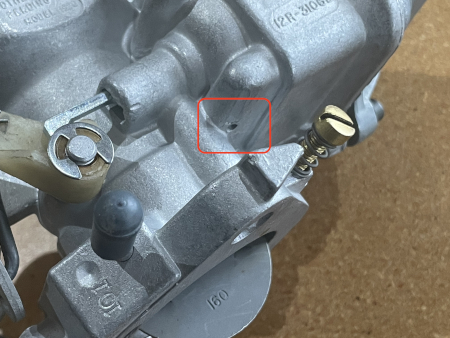
Now, you might wonder, what's the purpose of the relief hole? In essence, the relief hole is a design enhancement to prevent the formation of a vacuum or any undue pressure within the pump. By having this hole, it ensures a smoother and more consistent fuel delivery, leading to enhanced engine performance.
This hole is the relief, or indicator hole coming from behind the accelerator pump diaphragm. What does fluid coming out of this hole indicate?
1. The diaphragm could be ruptured allowing gas to get behind the accelerator pump diaphragm.
2. The metering block that cover the diaphragm could be warped (so many of them are because of the way they are tightened down), allowing fluid to get past the block and into the dry area of the diaphragm socket. The solution to #1 is easy, rebuild the carburetor, replacing the diaphragm. While #2 isn't quite as easy, it isn't a big deal either. Use a flat faced grinder to grind it flat and if that isn't available, then use a good flat file and file it flat. As a last resort, you can apply a small amount of Permatex anaerobic gasket sealer around the edges of the diaphragm.
The Holley Legacy
The Holley 1920 is not just any carburetor. It’s a testimony to Holley's commitment to innovation and quality. Their products have been trusted by mechanics and car lovers for decades.
Now if you just rebuilt the carburetor and need to replace the diaphragm, then keep in mind that there are several different diaphragms available for the Holley 1920. The differences are the stem length, stem is flat, or round and the cutout pattern on the diaphragm gasket area.
When you tighten the block down, start from the middle and work your way out, tightening the screws a little at a time.
