Car Surges, or Stumbles While Cruising
- Too much fuel, or too little fuel - check the float level. Don't fudge, set the float at specifications.
- Power valve leaking. This might show up on the power level also.
- Main discharge leaking - If running smooth at idle, then this probably isn't it, but at idle look down the carburetor. If gas is dribbling out of the venturi, then you have a leaky discharge.
- Take a couple of spark plugs out and look at the color. If tan, or light brown, then they are burning correctly. Black indicates too much gas and white indicates a lean situation.
- Main jets don't wear out, but if something changed on the carburetor, high performance parts added, carburetor is a transplant, or moved in elevation (5000 ft), then the jets may not be sized correctly.
- A vacuum leak can cause this. Check around the carburetor base, all vacuum lines and the intake.
- Ignition problems can also cause this, distributor, plugs, etc.
- There is the possibility a passage is plugged. Spray carburetor cleaner through each passage to make sure it goes through.
- The fuel pump may be too weak, look for 5 lbs prox. This can show up at higher speeds.
- Replace the fuel filter. A partially plugged filter will restrict gas flow.
Why Does my Engine Die After Starting?
Here is a list of possible solutions not in any order.
- Number 1 problem would be the ignition. Check plugs, wires and distributor.
- Clogged fuel filter
- Weak fuel pump. Test the pressure.
- Is it dying because of too much gas?
- Look down the carburetor after turning it off. Is any gas dribbling down the venturi. This would mean gas is getting siphoned from the float bowl because of non vented gas cap, carburetor vent(s) plugged off.
- Float may be bad or out of adjustment. It may be allowing enough fuel at idle but runs out at higher speed.
- Needle & Seat leaking.
- Is the choke closing when cold and not opening all the way until warmed up.
- Is it dying because of not enough gas?
- Kinked fuel line.
- Gas tank too low (not likely but have heard of some not working when gas gets too low.
- Rubber fuel line collapsing because of ethanol damage. You would probably see black particles in the float bowl.
- Dirty carburetor. Do you see any dirt in the float bowl when removed?
- Has the car been sitting for months at one point? Gas will turn to varnish and coat the inside of the gas tank and carburetor. Fresh gas will not fix this problem.
Why is my Holley Carburetor Flooding?
- Leaky needle and seat are the most common. See this page on how to test it
- Float leaking. Nitrophyl floats are solid but can absorb fuel. Weighing in grams is the only way to test this type.
- Float sticking. Move the float up and down by hand to see if you can feel any binding.
- Engines that have been sitting for several months can be a problem. Gas turns into varnish then coats the gas tank and the carburetor. Fresh gas is not the solution.
- Bad power valve. If the power valve is leaking then extra gas is being transferred to the main circuit. This will usually cause a richness and not necessarily flooding.
- Dirty or plugged passages. A rebuild may be needed. Blow out every passage, or spray carburetor cleaner through each passage.
My Carburetor Has Idle Mixture Screws On the Secondary Side Only
Idle mixture screws on the secondary’s and not primary is normal on some of the governor carbs, not all, but some.
Adjusting My Idle Screws Doesn't Have Any Effect on RPM.
A Vacuum Leak
If the engine is sucking in a large amount of unmetered air from outside the carburetor, the idle circuit cannot supply enough fuel to compensate.
-
Common Areas: Check the carburetor base gasket, the intake manifold-to-block gasket, or any vintage vacuum lines (like a vacuum wiper line or distributor advance). To keep the engine running with a massive leak, the throttle speed screw is usually cranked way up.
The Primary Throttle Blades are Open Too Far (Most Common)
If your idle speed screw (the throttle stop screw) is cranked in too far to keep the engine running, it forces the primary throttle plates open.
-
The Problem: This exposes too much of the idle transfer slot (the vertical slot just above the throttle blades inside the bore). If more than about 0.020'' to 0.040'' of that slot is exposed at idle (looking like a square instead of a tiny slot), the carburetor transitions out of the idle circuit and starts pulling fuel straight from the transfer slots. At that point, the idle mixture screws lose all control.
-
The Fix: Back off the primary idle speed screw. If the engine dies, you need to find out why it won't idle with the plates closed (e.g., incorrect timing, vacuum leak, or the secondary blades need adjusting).
The Secondary Throttle Blades are Misadjusted
The secondary throttle blades on a 4160 must be cracked open just a tiny fraction of an inch to prevent them from sticking in the bores and to keep fresh fuel flowing through the secondary bowl so it doesn't go stale. Take it slow because this screw will break eaily.
-
The Problem: There is a tiny, hidden secondary stop screw accessible from the underside of the baseplate on the passenger side. If someone turned this screw in too far, the engine is pulling a massive amount of air and fuel from the secondary bores at idle, completely overriding your primary idle mixture screws.
-
The Fix: Remove the carburetor and adjust the secondary stop screw so that the secondary transfer slot is barely exposed, or adjust it until the blades just seat, then turn it about 1/4 to 1/2 turn in.
Blown Power Valve
The power valve inside the primary metering block is designed to enrich the fuel mixture under heavy acceleration (low vacuum).
-
The Problem: If the engine has suffered a sharp backfire, or if the power valve diaphragm is old and ruptured, raw fuel will be sucked directly from the float bowl straight into the intake plenum through the vacuum channel. This creates an incredibly rich condition at idle that the mixture screws cannot lean out.
-
The Fix: Remove the primary bowl and metering block. Check the power valve. If you apply a light vacuum to it and it won't hold, or if there is raw fuel inside the vacuum chamber on the back of the metering block, it must be replaced.
Blocked Idle Air Bleeds or Idle Restrictions
The tiny brass orifices on the very top of the carburetor main body (the outer air bleeds) mix air with the idle fuel before it reaches the mixture screw.
-
The Problem: If dirt, a stray piece of gasket, or varnish plugs these tiny holes, the idle circuit will draw solid fuel instead of an emulsified air/fuel mix, making the circuit completely unresponsive.
-
The Fix: Blast out the idle air bleeds and the internal channels of the metering block with aerosol carburetor cleaner and compressed air.
Excessive Fuel Pressure or High Float Levels
Holley carburetors are sensitive to fuel pressure. They generally prefer between $5$ and $7\text{ PSI}$.
-
The Problem: If a mechanical or electric fuel pump is pushing 8{ PSI}$ or more, it will overpower the needle and seat. This forces the fuel level in the bowls way past the window/plug level, causing fuel to spill directly out of the primary or secondary main boosters at idle.
-
The Fix: Look down the venturis while the engine is idling. If you see fuel dripping or "raining" from the boosters, check your float level, and in the case of a fuel pump, install a fuel pressure regulator.
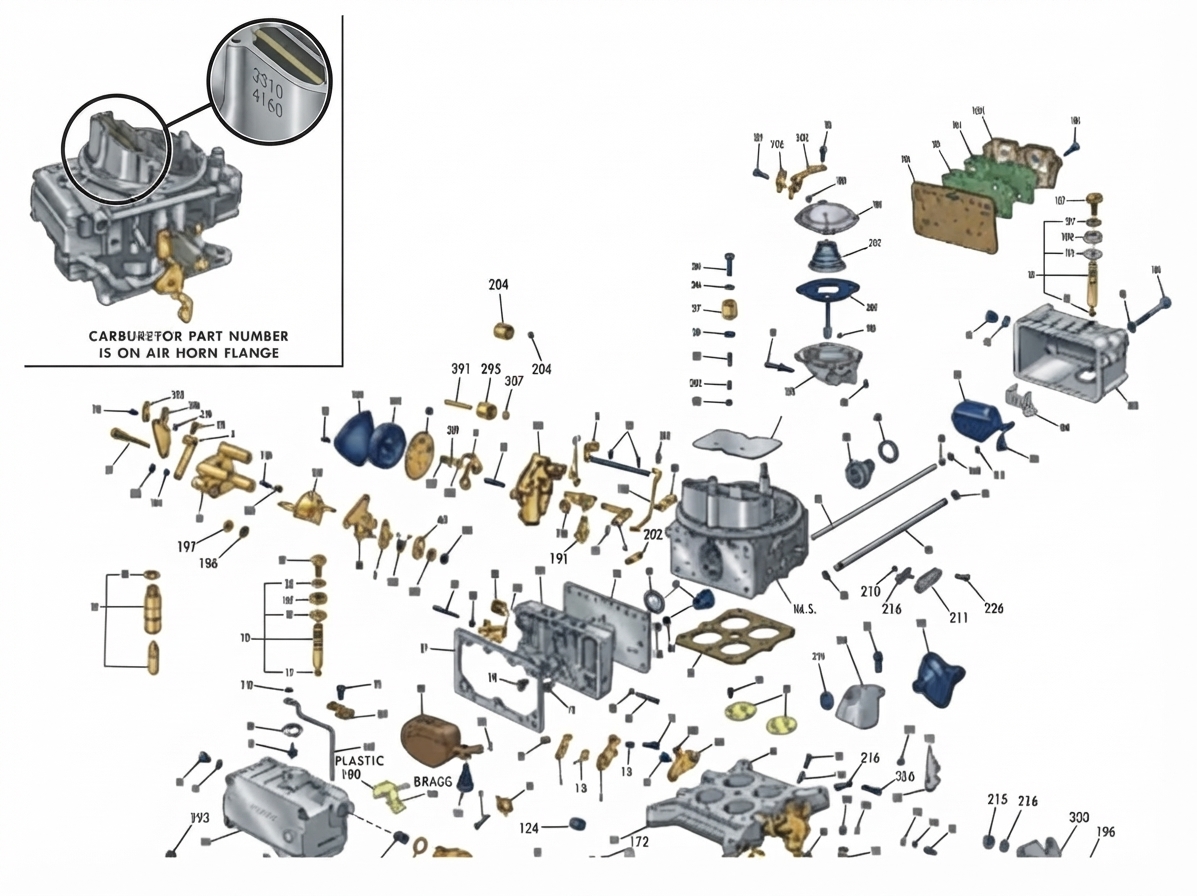
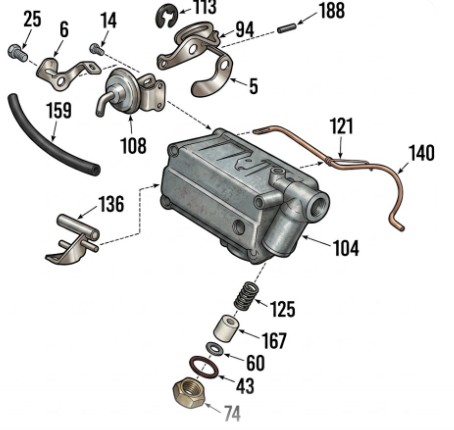
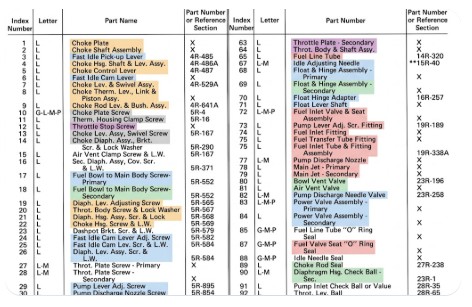
I Don't Know Where This Part Goes