
- Holley 1901 Troubleshooting
- Holley 1901 Float
- Holley 1901 Spark Valve
- Where Are The Vacuum Passages in the Holley 1901
- Adjusting the Idle on a Holley 1901
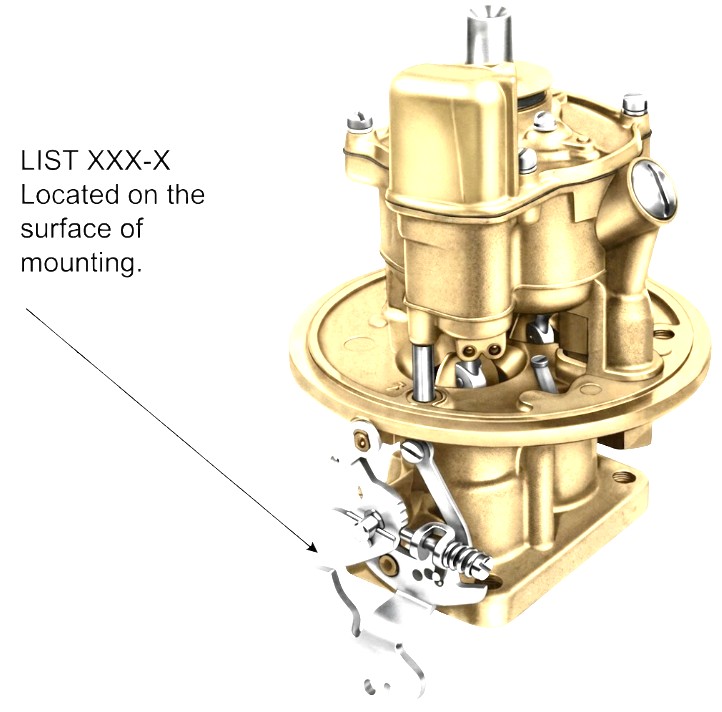
Holley 1901 Carburetor: Frequently Asked Questions
Q: What is the Holley 1901 carburetor, and what makes it unique?
A: The Holley Model 1901 is a dual concentric downdraft carburetor designed for Ford, Mercury, and Lincoln vehicles in the early 1950s. Its unique concentric design ensures efficient fuel and air mixing, even under harsh operating conditions like steep grades or sharp turns. The 1901 also features a main body suspended above the throttle body to allow air circulation and cooling, preventing fuel percolation and improving hot starts.
Q: Which vehicles used the Holley 1901 carburetor?
A: The 1901 was used on 1952 Ford, Mercury, and Lincoln vehicles, including Ford trucks, Mercury engines (with both standard and automatic transmissions), and Lincolns (sometimes with a special spark valve or governor). It was adaptable for both passenger cars and heavy-duty trucks.
Q: What are the main features and systems of the Holley 1901?
A: Key features and systems include:
-
Dual concentric construction for even metering.
-
Main, idle, power enrichment, and accelerating pump fuel systems.
-
A fully automatic choke for easy starting.
-
An “override” accelerating pump for smoother acceleration.
-
Dashpot (on Mercury with automatic transmission) to prevent stalling.
-
Spark control valve (on some Lincoln models) for optimal ignition timing.
-
Optional governor for speed control on trucks.
Q: How does the accelerating pump work on the Holley 1901?
A: The accelerating pump is linked to the throttle and supplies extra fuel during quick acceleration to prevent hesitation. Its linkage is adjustable to vary discharge, compensating for climate changes. An “override” feature allows a prolonged fuel squirt for smoother acceleration.
Q: What is the purpose of the dashpot on some Holley 1901 carburetors?
A: The dashpot, used mainly on Mercury models with automatic transmissions, slows the closing of the throttle during sudden deceleration. This prevents stalling and helps the engine dissipate excess fuel in the intake manifold. It can also reopen the throttle slightly if the engine approaches a stall at idle.
Q: How is hot starting improved in the Holley 1901?
A: The main body is suspended above the throttle body, allowing cool air from the air cleaner to circulate around the float chamber. This design keeps fuel cooler, preventing vapor lock and hard starting after the engine has been running hot.
Q: What maintenance is recommended for the Holley 1901?
A: Holley recommends regular cleaning, inspection, and use of a Master Repair Kit for worn or damaged parts. Overhauling the carburetor includes careful disassembly, cleaning, replacement of gaskets and seals, and reassembly following the manual’s step-by-step instructions.
Q: Does the Holley 1901 require any special tools for overhaul?
A: While ordinary tools can be used, Holley recommends specific tools (like special sockets and gauges) for safe, proper disassembly and reassembly. These tools help avoid damage to delicate parts and ensure accurate adjustments.
Q: Can the Holley 1901 be used with modern fuels?
A: The manual is from 1952, so it doesn’t specifically address ethanol-blended fuels. However, rubber and gasket materials from that era may not be compatible with today’s fuels, so modern rebuild kits with updated materials are recommended for safe use.
