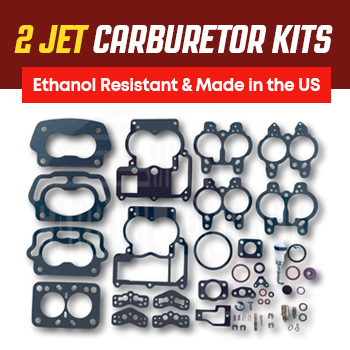
If your Rochester 2 Jet carburetor won't idle, there could be several reasons behind this issue. Understanding these potential causes can help you troubleshoot and resolve the problem effectively. Here's a look at some of the common reasons why your Rochester 2 Jet carburetor may be experiencing idling issues:
-
Dirty or Clogged Carburetor: Over time, carburetors can accumulate dirt, debris, and varnish from evaporated fuel, leading to clogged passages and jets. This can restrict the flow of fuel and air, preventing the carburetor from maintaining a stable idle. Cleaning the carburetor thoroughly can often resolve this issue.
Car has been sitting for a long period of time: The gas has turned to varnish, coating the inside of the carburetor, fuel lines and gas tank. The carburetor lines and gas tank should be cleaned. Just adding new gas will seldom do the trick. You will generally smell the varnish when near the carburetor.
Vacuum Leaks: Vacuum leaks in the intake manifold or between the carburetor and the manifold, or in any of the vacuum lines leading from the carburetor, can lead to excess air entering the engine, disrupting the fuel-air mixture. This can cause high idle speeds or a rough, unstable idle. Inspecting and replacing any damaged gaskets or hoses can eliminate vacuum leaks.
-
Improper Idle Mixture Adjustment: The Rochester 2 Jet carburetor has an adjustable idle mixture screw that controls the fuel-air mixture at idle. If this mixture is too lean or too rich, it can cause the engine to stall or run erratically at idle. Adjusting the idle mixture screws for the correct balance can improve idle performance.
-
Faulty Idle Speed Screw Setting: The idle speed screw controls the engine's idle speed by adjusting the throttle plate's position. If this screw is improperly adjusted, it can lead to an engine that won't idle. Adjusting the idle speed screw to the manufacturer's specifications can help.
-
Worn Out Carburetor Components: Over time, internal components of the carburetor, such as the throttle shafts, can wear out, leading to air leaks and poor idling. Inspecting and replacing worn components can restore proper carburetor function. Check the throttle shaft for wear. It may need to be re-bushed. While idling, spray some carb cleaner around the throttle shaft ends. Any RPM change indicates a leak.
-
Incorrect Fuel Pressure: Excessive or insufficient fuel pressure can affect the carburetor's ability to deliver the correct fuel-air mixture. Verifying that the fuel pressure is within the recommended range can help resolve idling problems.
-
Choke Issues: If the automatic choke is not functioning properly, it can cause the engine to run too rich or too lean at startup and during warm-up, affecting idle. Checking and adjusting the choke operation can ensure proper function.
Main Discharge Leaking: Look down the carburetor while idling and see if gas is dribbling from the venturi. If you do, then gas is being syphoned from the discharge. The check ball may not be seating, or perhaps the spring above the check ball is missing. To seat the check ball, tap it lightly to form a good though.
Do you small gas around the engine when running. That would be an indication of running too rich, or some flooding going on.
Addressing these issues requires a systematic approach to diagnose and fix the specific cause of the idle problems. In some cases, a combination of these factors may be at play, necessitating a comprehensive examination and adjustment of the carburetor settings and related systems.