
How Does the Motorcraft 2150, 2 Barrel Carburetor Choke Pull-Off Work?
Choke Pull Off - how it hooks up
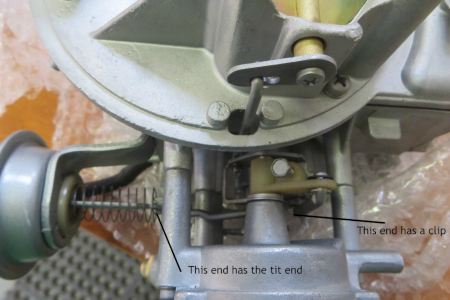
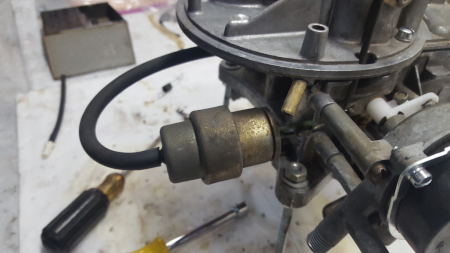

How To Ground a 2150 Electric Choke?
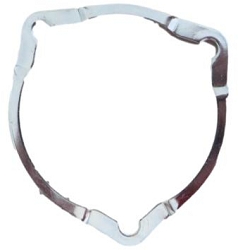 This retainer will touch the metal on your thermostat and the carburetor which acts as the ground.
How To Adjust The Thermostat?
Here’s a step-by-step guide for adjusting the choke thermostat on a Motorcraft 2150 carburetor:
1. Identify the Choke Housing
-
On the Motorcraft 2150, the choke thermostat is located on the passenger side of the carburetor.
-
It’s a round, black (or metal) choke housing cover held in place with three screws.
-
A small metal index mark is stamped on both the choke housing and the carb body for reference.
2. Preparation
-
Ensure the engine is cold before making adjustments.
-
Disconnect the air cleaner so you can see the choke plate.
-
Loosen (don’t remove) the three retaining screws on the choke housing.
3. Set Initial Alignment
-
Rotate the choke housing until the index marks line up — this is the factory baseline setting.
-
Turning the housing clockwise (toward “R” or lean) makes the choke open sooner.
-
Turning it counterclockwise (toward “C” or rich) makes the choke stay closed longer.
4. Fine Adjustment
-
Adjust in small increments (about one notch at a time).
-
After adjustment, gently close the choke plate with your finger — it should just close snugly when cold.
-
Start the engine: the choke plate should stay closed for initial start, then open gradually as the engine warms up.
5. Choke Pull-Off Check
-
With the engine running, the choke pull-off diaphragm should crack the choke plate open slightly (about 1/8") to prevent flooding.
-
If it doesn’t, adjust or replace the choke pull-off diaphragm separately — thermostat adjustment won’t fix that issue.
6. Final Verification
-
Cold start: engine should start without excessive pumping.
-
Warm start: choke plate should be fully open.
-
Drive test: engine should not stall cold, nor run overly rich (black smoke, fuel smell).
Rule of Thumb: If the engine idles too fast and stays rich, rotate housing lean (clockwise). If the engine hard-starts cold and stalls quickly, rotate housing richer (counterclockwise).
