
The Holley 1940 is a one-barrel carburetor that was used on a variety of vehicles throughout the 1960s and 1970s. Understanding its float circuit is essential for troubleshooting and tuning. Here’s a brief overview of the float circuit and its functions:
Holley 1940 Carburetor Float Circuit
Purpose: The float circuit maintains the proper fuel level inside the float bowl, which is crucial for the correct operation of other circuits like the idle, main metering, and accelerator pump circuits.
Float and Needle Valve:
- The float in the float bowl rises and falls with the fuel level. It's usually made of brass or nitrophyl.
- The needle valve, attached to the float, is responsible for allowing fuel into the bowl from the fuel inlet.
- When the fuel level in the bowl rises, it lifts the float, which in turn closes the needle valve, stopping the fuel inflow. As the fuel level drops, the float descends, opening the needle valve and allowing fuel to refill the bowl.
Seat: The needle rests on a seat, forming a seal when the float is raised. It's crucial for the seat to be free of debris and wear to ensure proper sealing.

Float Level Adjustment:
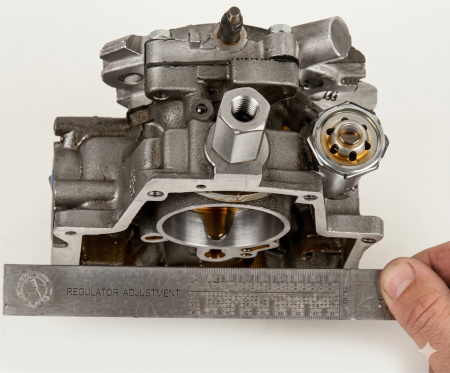
- Proper float level is critical for carburetor performance. If the float level is too high, it can cause flooding and rich conditions. If it's too low, it can result in lean conditions.
- Adjusting the float level typically involves bending the float tang that contacts the needle valve. However, always refer to the manufacturer's specifications and instructions for proper procedures.
Float Drop: This is the distance the float hangs down when the needle is off its seat, which ensures that the needle opens fully to allow enough fuel into the bowl. This is adjustable via a tang on the float as well.
Venting: The float bowl is vented to the atmosphere, ensuring there's no vacuum or pressure buildup inside the bowl. This helps maintain steady fuel flow and avoids erratic performance.
Troubleshooting:
Sticking Float or Needle Valve: If the float sticks or if debris prevents the needle valve from closing, it can cause flooding and fuel spillage. Cleaning and occasionally replacing the needle and seat can remedy this.
Sunk Float: If a brass float develops a hole, it can fill with fuel and sink, leading to an over-rich condition. This would require float replacement.
Incorrect Float Level: Symptoms can vary depending on whether the float level is set too high or too low. A high float level can cause flooding and a rich mixture. A low float level can cause a lean mixture and poor throttle response.
Always remember to use the correct specifications when setting float levels or making any adjustments. If you are unfamiliar with carburetor tuning or if you encounter issues, consulting a reputable manual or seeking professional assistance is recommended.

