
- 1904 Empties Float Bowl Overnight
- 1904 Accelerator Pump Problems
- 1904 Carburetor Floods
- Why the 1904 Only Runs With Choke On?
- Troubleshooting Dual Carburetor Rich Conditions and Erratic Idle
Holley 1904 Accelerator Problem
Hi Mike, I resolved the problem I sent you last week. The problem was a vacuum leak at the base of the carburetor. Replaced the gasket and seems to be ok now. The other problem I am having is when I first start to accelerate the engine hesitates and I have to back off the throttle and pump the accelerator. Once I get going all is ok. I have adjusted the air fuel mixture but the problem remains. Do you think I should install a larger jet to increase fuel flow to match the air intake? If I increase throttle real slow it doesn’t hesitate. Leads me to think too much air and not enough fuel.. Thoughts???
Installing a larger jet is not the answer. Do the steps below and you will probably find the problem.
Check the accelerator pump circuit action by looking down the carburetor (engine off) and pump the throttle. You should see a strong stream coming out of the main discharge nozzle. If it looks ok, then you have eliminated the accelerator pump as the problem.
No strong stream?
- Make sure the main discharge nozzle is clear. Run thin wire through the discharge hole.
- Check to make sure there is a gasket under the nozzle and it isn’t broken. You don’t want fuel bypassing the nozzle.
- Make sure the accelerator pump diaphragm was put together properly. The pump, the return spring, then the economizer body.
- While you have the diaphragm out, look at the carefully to make sure there isn’t a crack, or tear.
- The pump stem should have the spring over the stem, then the pump rod sleeve. The check ball should be installed in the small hole. If the spring is missing, or there isn’t enough tension, then the diaphragm won’t get the correct action, filling with fuel when needed.
- The metering block, or economizer body can get warped over time. Be sure to grind the surface flat, or run a flat file over the surface to make sure it is flat. When they aren’t flat, fuel can leak past the block.
- The economizer body should have a check ball and a check weight on top of the ball in the economizer body, longer hole. The smaller hole will have the bigger check ball installed.
- Did you clean the economizer body (metering block). Perhaps there is corrosion inside the holes which might mean the check balls are not sealing.
Good stream?
Assuming your distributor vacuum advance connects to the carburetor, you will need to make sure the vacuum isn’t blocked. Remove the fitting and check for vacuum. No vacuum means the passage way is blocked, or plugged with something. It was a practice with some rebuilders to put a check ball in the passage way to block the vacuum when the port wasn’t needed. Check the bottom of the main body to see if a check ball was put in the hole. Make sure the flange gasket isn’t blocking the vacuum hole on the bottom of the throttle body.
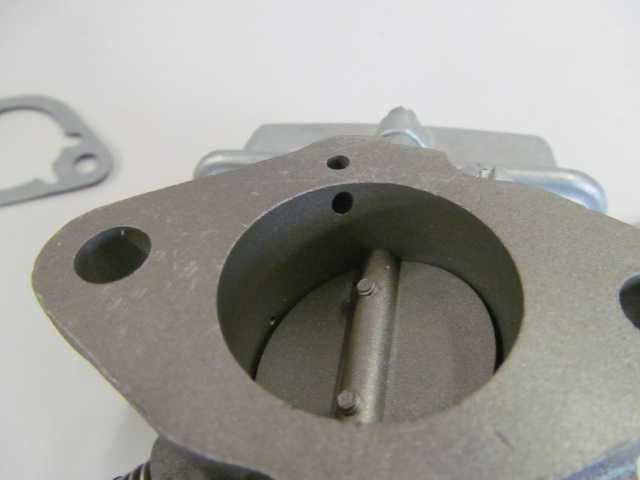
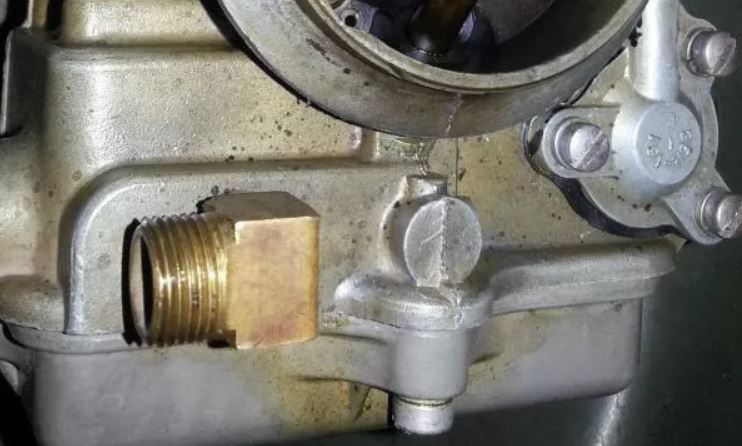


- First take care of the ignition system. People tend to blame the carburetor for any problem when the electrical should be the 1st thing to look at. Once the electrical system is good then look at the carburetor.
- Check for vacuum leaks. Check around the mounting gasket, throttle body, intake manifold and any vacuum lines coming from the carburetor, or intake manifold.
- Check the throttle shaft for looseness. Spray some carburetor cleaner around the ends of the shaft. If the RPM smooths out, you found the problem.
Are you getting too much fuel at idle?
- Determine if fuel is dribbling out of the main discharge at idle. That shouldn’t be happening and is probably due to the discharge check ball not seating.
- The needle & seat could be leaking. Treat the seat gaskets with Permatex Anarobic.
- Remove the idle mixture screw and blow out the passage. Put a finger over the idle mixture hole in the bore and blow through the mixture hole. Is air coming out of the top?
- Blocked passages might be caused by old fuel turning and coating the inside of the carburetor. A rebuild/cleaning would be called for.
Rebuilt My Carburetor But Still Floods
Aside from you doing something incorrectly there are a couple of ideas.
Did you test the fuel pump for proper pressure – about 4 lbs.
Is dirt getting into the carburetor. Many rebuilds go bad because the fuel filter, or tank is dirty and polluting the carburetor after it is cleaned.
Did you test the needle & seat to make sure it’s sealing. The 1904 is notorious for leaking around the seat. See above for flooding comments.
Doesn't Idle Well. Turning Idle Mixture Screws Makes Little Difference
When the idle mixture screw on a Holley 1904 has no effect, the idle circuit is either being bypassed entirely, overpowered by excess fuel, or completely blocked.
Here are the most likely culprits on the 1904, starting with the most common:
1. Throttle Valve Open Too Far
If the engine needs the idle speed screw turned way in just to stay running, the throttle plate is opening too far and exposing the transition slots.
-
The Issue: Vacuum is pulling fuel directly from the main circuit via the transition slots. Once the main circuit is active, the idle mixture screw is entirely bypassed and will do nothing.
-
The Fix: Back off the idle speed screw until the throttle plates are nearly closed. If the engine dies, you likely have a vacuum leak or an ignition timing issue that is forcing you to artificially raise the idle speed.
2. Vacuum Leaks & Warped Flanges
The 1904 is notorious for warped mounting flanges, especially if the base nuts have been overtightened over the years.
-
The Issue: A massive amount of unmetered air leans out the mixture so severely that adjusting the fuel flow at the idle circuit can't compensate.
-
The Fix: Check the base mounting flange with a straight edge. If it's warped, it will need to be carefully filed or machined flat. Also, double-check the vacuum wiper port, distributor vacuum lines, and base gasket for leaks.
3. Ruptured Economizer Valve
If the engine is running incredibly rich, loading up at idle, and ignoring the mixture screw, look at the economizer (power) valve.
-
The Issue: The 1904 uses a vacuum-actuated diaphragm economizer valve. If that diaphragm is ruptured, or its gasket is compromised, manifold vacuum will suck raw fuel directly from the bowl into the engine. It will idle terribly, run rich, and completely overpower the idle circuit.
-
The Fix: Inspect the diaphragm for pinholes or tears, and ensure its seating surface in the main body is perfectly clean and flat.
4. Plugged Idle Passages - Most Likely
If the engine is starving for fuel at idle but runs fine once you open the throttle, the circuit itself is obstructed.
-
The Issue: The idle restrictor, the idle air bleed, or the passage right behind the mixture screw is blocked by debris or varnished fuel.
-
The Fix: Pull the mixture screw completely out. Inspect the needle tip to ensure it isn't grooved or snapped off inside the hole. Shoot carburetor cleaner followed by compressed air directly into the mixture hole to clear the passage. Verify that the idle air bleed at the top of the carburetor is also clear.
5. High Float Level or Fuel Pressure
-
The Issue: If the float is set too high, or the needle and seat aren't sealing, fuel will dribble directly out of the main discharge nozzle at idle. This creates a rich condition that the idle mixture screw cannot adjust out.
-
The Fix: Verify your float drop and level. Modern fuel pumps often output too much pressure for these older single-barrels; ensure your fuel pressure isn't exceeding 4 to 4.5 psi, which can blow right past the needle valve.


