
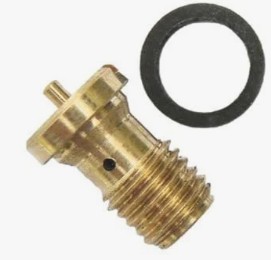
A bad power valve (also known as a high-speed enrichment valve) on a Stromberg WW can cause several distinct performance issues, usually centering on fuel delivery during high-load or high-speed conditions.
On the WW series, the power valve is vacuum-operated. When manifold vacuum drops (like when you step on the gas to pass someone or climb a hill), a spring overcomes the vacuum pull and pushes the valve open to richen the mixture.
Key Symptoms of a Failing Power Valve
-
Bogging or Hesitation under Load: If the valve is stuck closed or the vacuum piston is frozen, the engine will lean out exactly when it needs extra fuel. This results in a "flat spot" or hesitation during acceleration. Eliminate the accelerator pump circuit first. It is more likely to cause hesitation.
-
Poor High-Speed Performance: Since the power valve supplies the extra fuel needed for high RPMs, a failure here often prevents the engine from reaching its full power potential at top speeds.
-
Extreme Rich Condition at Idle (Diaphragm/Piston Leak): If the internal vacuum seal is ruptured, manifold vacuum can pull raw fuel directly through the power valve circuit and into the intake manifold. This causes:
-
A very "heavy" or "rolling" idle.
-
Strong smell of unburned gas.
-
Sooty, black spark plugs.
-
-
Engine Surge: If the valve is "fluttering" due to a weak spring or a vacuum leak in the power piston housing, you may feel the engine surging or pulsing while maintaining a steady high speed.
Quick Diagnostic Tip
If you suspect the power valve is leaking fuel into the engine at idle, you can often see it by looking down the throat of the carburetor (with the engine off but recently run). If you see fuel dripping from the discharge nozzles or "puddling" on the throttle plates while the engine is just sitting, the power valve or its gasket is a primary suspect.
