
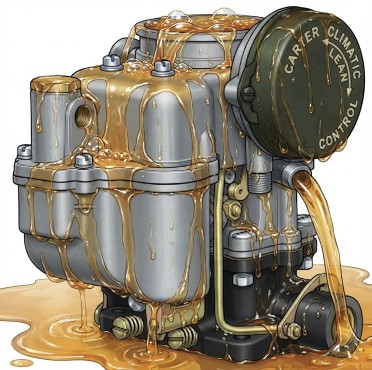
   Carter WDO Carburetor – Trouble IdlingIs your Carter WDO carburetor struggling to idle properly? Whether the engine stalls, surges, or just won’t settle into a smooth idle, you’re not alone. The Carter WDO is a solid, reliable carburetor—but like any fuel system, it needs to be dialed in correctly. Here’s a breakdown of common causes and how to fix them. |

Common reasons why a Carter WDO carburetor produces black smoke
Incorrect float height or excess fuel pressure
High fuel pressure from the pump or a float set too high causes the bowl to overfill.
Overflowing fuel makes the mixture overly rich, resulting in black tailpipe smoke.
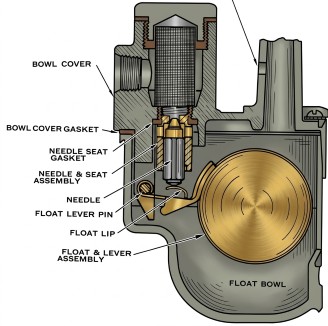
Faulty needle or seat - most common
A damaged or dirty needle and seat prevent proper fuel shut-off.
Fuel continues to flow, flooding the carburetor and producing black exhaust.
Metering rod and vacuum piston issues
Metering rods must be correctly installed and move freely.
If they or the vacuum piston stick, the engine remains on a rich setting.
Choke stuck closed or misadjusted
The choke enriches the mixture only when cold. If it stays closed after warm-up, the mixture stays rich.
Dirt, rust, or mis adjustment in the choke mechanism are common causes.
Other carburetor defects
Warped bowl cover, worn metering rods, stuck accelerator pump parts, and clogged air bleeds all disrupt fuel metering.
These problems can cause the carburetor to run rich.
Dirty air filter
A clogged filter restricts airflow, upsetting the air-fuel balance.
Reduced air intake makes the engine run rich, so black smoke appears.
How to fix it
Check ignition timing and spark plugs first; a properly tuned engine is essential.
Inspect fuel pump pressure and adjust the float height to factory specs. 4 lbs or less.
Clean or replace the needle and seat.
Verify that metering rods, springs and pistons move smoothly.
Service the choke: clean the mechanism and adjust it so the plate opens fully when warm.
Ensure the air filter is clean and allows proper airflow.
By methodically working through these points, you can diagnose and resolve the root cause of black smoke on a Carter WDO-equipped engine.
A Carter WDO carburetor can flood when too much fuel enters the float bowl and spills into the intake. This condition can be caused by several mechanical or fuel system issues.
1. Float and Needle Valve Problems
Float Level Too High – If the float is adjusted above spec, it won’t close the needle valve soon enough, allowing excess fuel to enter.
Stuck or Leaking Float – A float with a pinhole will fill with fuel and sink, preventing proper shutoff.
Worn or Dirty Needle and Seat – Dirt, corrosion, or wear on the sealing surfaces can stop the needle from sealing completely.
2. Fuel Pump Pressure Too High
Mechanical or electric fuel pumps that produce more pressure than the WDO’s design (usually 3–4.5 PSI) can overwhelm the needle valve and force fuel past it.
3. Debris in the Fuel System
Rust, varnish, or dirt from the fuel tank or lines can get lodged in the needle and seat, keeping it open.
Even with filters, small particles can pass through and cause intermittent flooding.
4. Warped or Damaged Carburetor Top
The WDO’s top cover must seal evenly to maintain proper float operation. Warping from overtightening or heat can misalign the needle valve.
5. Heat-Soak Fuel Percolation
After shutting the engine off, heat can cause the fuel in the bowl to expand, pushing it into the venturi and intake. This often mimics flooding on restart.
6. Choke System Malfunction
A choke that stays closed too long or is misadjusted can create an overly rich mixture that appears as flooding.
A Carter WDO carburetor can be hard to start—whether cold or hot—due to several common issues. Here’s a breakdown of the likely causes and what to check:
1. Cold Start Problems
Choke Not Closing Fully:
The automatic or manual choke plate must close almost completely when the engine is cold. If the choke is sticking, misadjusted, or the choke pull-off diaphragm is leaking, the mixture will be too lean for cold starts.Fast Idle Cam Misadjustment:
If the fast idle cam is not engaging properly, the engine won’t get the higher idle speed needed for a smooth cold start.Vacuum Leaks:
Any leak at the carb base gasket, intake manifold, or vacuum fittings can cause a lean condition that’s especially noticeable during cold starts.
2. Hot Start Problems
Percolation / Fuel Boil-Off:
Heat soak after shutdown can cause fuel in the bowl to evaporate or boil, leading to vapor lock or flooding.Float Level Too High:
Excessive fuel level will cause flooding after a hot soak.Needle and Seat Leakage:
Even a small piece of debris can hold the needle open, letting fuel drip into the intake after shutdown.
3. General Fuel Delivery Issues
Clogged Idle Circuit:
If the idle passages are restricted, the carb may require excessive pumping or choke to start.Low Fuel Pump Pressure:
Insufficient fuel pressure or volume will delay bowl refill and make starting difficult.Incorrect Mixture Screw Setting:
Screws set too lean or too rich can affect start quality.
4. Ignition & Timing Factors
Weak Spark:
Worn points, coil, or low voltage can make the carburetor seem like the problem when it’s actually ignition-related.Incorrect Timing:
Both retarded and overly advanced timing can cause hard starting and poor idle quality.Here’s a step-by-step Carter WDO Hard Start Diagnostic Checklist you can follow. This will help you systematically eliminate causes for both cold and hot start problems.
1. Initial Visual Inspection
Check for loose or damaged vacuum hoses.
Inspect carburetor base gasket for cracks or leaks.
Confirm all linkage (throttle, choke, fast idle cam) moves freely.
Look for signs of fuel leakage around the carburetor.
2. Cold Start Diagnosis
Choke Plate Position
With engine cold, press accelerator pedal once.
Choke plate should close almost fully.
Fast Idle Cam
Verify cam engages and holds throttle slightly open for higher cold idle.
3. Hot Start Diagnosis
Fuel Percolation Check
After shutdown, remove air cleaner and watch for fuel boiling or dripping into venturi.
Float Level
Verify with spec (typically ~5/64" to 3/32" below top of float bowl, but check your WDO manual).
Needle & Seat Condition
Remove and inspect for dirt, grooves, or sticking.
Heat Shield
Ensure any original heat shield or spacer under carb is present to reduce heat soak.
4. Fuel Delivery Checks
Fuel Pump Output: Confirm correct pressure (usually 3-4 psi for WDO).
Filter Condition: Replace clogged filters.
Idle Circuit: Spray carb cleaner through idle mixture screw ports and idle passages.
5. Mixture & Idle Adjustment
Idle Speed Screw — Set to factory RPM spec (usually around 450–550 RPM in gear for automatics).
Idle Mixture Screws — Adjust for highest steady vacuum reading (use vacuum gauge).
Recheck for vacuum leaks after adjustment.
6. Ignition System Verification
Check timing against spec.
Verify good spark at plugs.
Replace worn ignition components before chasing carb issues.
7. Final Test
Test cold start — should fire without excessive pumping.
Test hot restart — should start within 2–3 seconds without touching accelerator.
Test idle in gear — should not stall or drop excessively in vacuum.
A Carter WDO that drips fuel out of only one venturi is pointing to an imbalance on that side, not a general fuel system problem. Since you’ve already confirmed the metering rods and jets are matched, here are the most likely culprits:
1. Throttle Plate Fit & Alignment
If one throttle plate isn’t sealing as tightly as the other, that bore will have slightly higher vacuum at idle.
This imbalance can pull fuel through just one venturi even though both sides should act the same.
Check: With the carb off the car, hold it up to the light. If you see more light around one plate, it’s not sealing properly. Sometimes plates get swapped or rotated during a rebuild, which changes their fit.
2. Idle Tube or Passage Restriction
If the idle circuit feeding one side is partially blocked, that side may not get the proper fuel through the idle discharge ports.
The venturi will then act as the “path of least resistance” and start dripping fuel instead.
Check: Remove the idle tubes and blow cleaner/compressed air through all idle channels. Even a small bit of varnish can cause this imbalance.
3. Casting Flaw or Crack
Carter WDO throttle bodies are known to develop hairline cracks near the idle feed passages.
A crack can create an unintended vacuum path that draws fuel from the main circuit into just one venturi.
Check: With carb assembled, spray carb cleaner around throttle body areas while running. Any RPM change indicates a hidden crack or leak.
4. Float/Needle/Seat Overfueling
Even though both bores share the float bowl, an overfilling bowl or a leaky needle/seat can sometimes cause dripping that shows up more on one side, depending on how the passages sit in the casting.
Check: Confirm float height and drop, and verify the needle/seat are sealing properly.
5. Secondary Air Bleed or Vent Restriction
If the air bleed feeding one main well is blocked, fuel delivery will be unmetered on that side.
That venturi will “drip” while the other side stays correct.
Check: Run a fine wire through both main well air bleeds to ensure they’re equally open.
Summary
Since it’s dripping from only one side:
First check throttle plate alignment (most common cause).
Next confirm idle tube and bleed passages are clean and clear.
Inspect for casting cracks or leaks if the first two don’t fix it.
Here’s a step-by-step troubleshooting checklist for your Carter WDO carburetor that is dripping fuel from only one venturi:
Carter WDO – One-Side Venturi Drip Diagnostic Checklist
Step 1: Throttle Plate Fit & Seal
Remove the carburetor and hold the throttle body up to a bright light.
Check if both throttle plates seal evenly.
If one plate shows more light/leakage ? that bore has higher vacuum and will pull fuel.
Swap plates left to right to see if the leak follows the plate.
Step 2: Idle Tube & Passage Cleaning
Remove both idle tubes.
Spray carb cleaner and blow compressed air through the idle passages for both sides.
Confirm fluid/air comes out at the idle discharge ports.
If one side is blocked ? clean until flow is equal.
Step 3: Main Well Air Bleeds
Locate the small air bleed holes in the air horn that feed the main wells.
Pass a fine wire or carb tool through them to ensure they’re not blocked.
Blocked air bleed = rich fuel drip in that bore.
Step 4: Float Level & Needle/Seat Check
Verify float height and drop against Carter WDO specs.
Inspect the needle/seat for wear or dirt preventing proper sealing.
Even though both bores share a bowl, excess fuel may preferentially drip through one side depending on passage alignment.
Step 5: Vacuum Leak / Casting Check
With carb assembled and running, spray carb cleaner around the throttle body and idle well areas.
If RPM changes, you may have a crack or porosity in the casting on the leaking side.
Inspect closely for hairline cracks near the throttle bores.
Step 6: Final Functional Test
With air cleaner removed and engine idling, gently cover the top of each venturi with your hand (one at a time).
If the engine stumbles equally on both sides, fuel balance is correct.
If one side causes a big RPM drop and the other doesn’t, that bore is still flowing incorrectly.
