
The Carter Thermo-Quad solenoid vent (often called the Bowl Vent Solenoid) is designed to control fuel vapors and prevent hard starting when the engine is hot.
Its primary purpose is to switch the path of fuel vapors based on whether the engine is running or turned off.
How it Works
-
Engine Off (Venting to Canister): When you turn the ignition off, the solenoid de-energizes. This opens a mechanical vent valve that allows fuel vapors from the float bowl to travel through a hose into the charcoal canister. This prevents "gas smell" in the garage and keeps pressure from building up in the bowls.
-
Engine Running (Internal Venting): When the engine is running, the solenoid is energized (usually via the ignition circuit). This closes the external vent to the canister and ensures the carburetor vents internally. This maintains the correct air pressure over the fuel in the bowl so the fuel metering remains accurate.
Why it Matters
If this solenoid or the vent valve fails, you’ll usually see two specific issues:
-
Hot Start Problems: If the vent doesn't open when the engine is off, pressure builds up in the fuel bowl and forces raw fuel down the venturis. This "floods" the engine, making it very difficult to start after it’s been sitting hot for 20 minutes.
-
Rough Idle/Rich Run: If the vent stays open to the canister while you are driving, it can create an unintended vacuum leak or mess with the bowl pressure, leading to inconsistent performance.
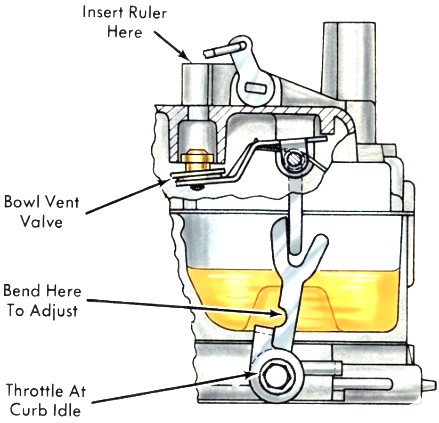
- Remove bowl vent valve checking hole plug in bowl cover
- Place throttle at curb idle position
- Insert narrow ruler down through hole
- Rest ruler lightly on top of bowl vent valve
- Record measurement from top of valve to top of bowl cover. Refer to specifications
- If adjustment is needed, bend bowl vent operating lever at notch until correct measurement has been reached
- Install new hole plug and tap lightly to seat
- Remove air cleaner assembly
- Disconnect hose to solenoid bowl vent diaphragm
- Connect outside vacuum source and apply at least 15" Hg to diaphragm
- Look down through air horn vent tube and observe valve movement
- Turn ignition switch ON
- Remove outside vacuum source from diaphragm. Valve should remain in down position until ignition switch is turned OFF
- If valve does not move with applied vacuum, diaphragm is leaking and must be replaced
- If valve does not remain in down position when ignition switch is turned ON and vacuum source is removed, solenoid or its related wiring is faulty
-
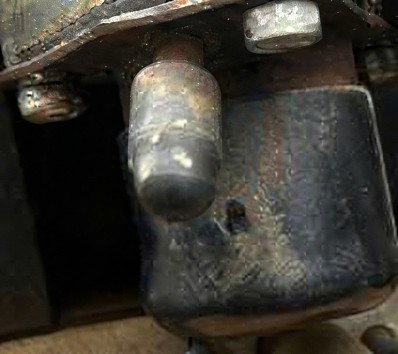
The port plugged on the body of the solenoid is a vent or atmospheric port, often used on EGR or canister purge solenoids to allow the diaphragm to return or to vent residual vacuum when the valve closes. Blocking it prevents the valve from cycling properly because it traps air or creates a vacuum lock inside the housing, essentially disabling its ability to bleed off vacuum.
-
Solenoids with a single wire rely on the solenoid bracket and mounting frame for their ground path, while the single wire supplies switched 12-volt power (or vice versa, depending on whether the computer switches the power or the ground). Since the green connector only has one prong, you can test the solenoid by applying 12 volts to that single wire terminal while grounding the metal body of the solenoid directly to the battery negative terminal—you should hear and feel an audible "click" as the internal pintle actuates.
