
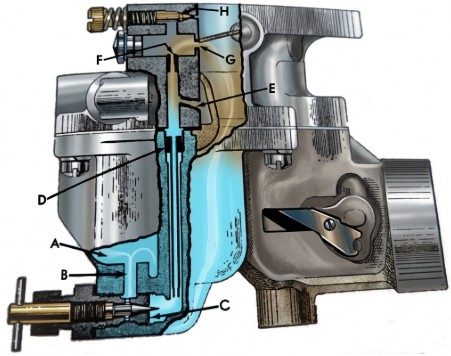
A rough idle on a Carter UT is usually caused by an imbalance in the air-fuel ratio at low speeds or a physical obstruction in the tiny passages that handle fuel when the throttle plate is nearly closed.
Since the Carter UT is a relatively simple "up-draft" or "side-draft" carburetor, you can narrow down the "roughness" using this step-by-step checklist.
1. The Idle Mixture Screw Adjustment
The most common cause is simply an out-of-adjustment needle.
-
The Goal: Find the "sweet spot" where the engine runs smoothest.
-
The Fix: 1. Warm the engine up fully.
2. Turn the idle mixture screw in (clockwise) until the engine begins to stumble.
3. Slowly turn it out (counter-clockwise) until the engine reaches its highest, smoothest RPM.
4. Note: On many Carter UTs, this is an air-adjusting screw. Turning it in makes the mixture richer; turning it out makes it leaner.
2. Vacuum Leaks (The "Invisible" Culprit)
A rough idle is often caused by "false air" entering the engine behind the carburetor.
-
Check the Throttle Shaft: Over decades, the brass shaft that holds the throttle plate wears out the holes in the cast iron body. If the shaft "wiggles," air leaks in there, leaning out the mixture.
-
Check Gaskets: Use a bit of unlit propane from a torch or spray a tiny mist of carb cleaner around the mounting flange. If the engine RPM changes, you have a leaking gasket.
3. Clogged Idle Port or "Economizer" Jet
Referencing the diagram you uploaded: at idle, the throttle plate (J) is almost closed. Fuel is pulled through a tiny hole just above the throttle plate edge.
-
The Problem: These holes are no larger than a pinhole. A single speck of rust or old "varnish" from stale gas will cause a lean stumble.
-
The Fix: You often have to remove the idle mixture screw and blow compressed air through the hole. If that doesn't work, the carburetor requires a "soak" in cleaner and a rebuild.
4. Incorrect Idle Speed (RPM)
If the idle speed is set too low, the engine won't have enough inertia to overcome the compression strokes smoothly.
-
The Fix: Adjust the idle stop screw (located on the throttle linkage, not the mixture screw) to increase the RPM slightly. If the roughness goes away, the idle was simply set below the engine's stable threshold.
5. Ignition vs. Carburetor
Before tearing the carb apart, ensure the "roughness" isn't an electrical miss.
-
The Spark Test: A weak coil, pitted points, or fouled spark plugs will feel like a "carburetor stumble."
-
The "Choke Test": While the engine is idling roughly, pull the choke out very slightly.
-
If it gets better: You have a fuel/vacuum problem (too lean).
-
If it gets worse: You have an ignition problem or an over-rich condition.
-
