
That symptom is definitely a head-scratcher, but we can rule out one thing right away: engine vacuum physically overcoming your foot and slamming the throttle plates shut. On a conventional Rochester 2G / 2GC (Two-Jet) carburetor, the throttle plates are purely mechanical. They are directly pinned to the throttle shaft, which is hard-linked to your gas pedal. Under normal conditions, there isn't enough vacuum velocity to overpower your physical foot pressure on that linkage.
If the plates open perfectly when the engine is off, but won't budge when it's running—yet you can force them open from inside the throat with a screwdriver—we have a unique mechanical conflict happening.
Here is what is likely going on and how to fix it:
1. The Base Gasket is Catching the Throttle Plates
This is the most common culprit after a fresh rebuild. When the engine is off, there is no vacuum, and the throttle shaft might have just enough wiggle room to clear. But when the engine is running, the high intake vacuum pulls the throttle plates downward against the shaft bushings. If the new base gasket is slightly misaligned, or if it's the wrong thickness/bore size for your specific Two-Jet model, the edges of the throttle plates will snag on the gasket material the second vacuum pulls down on them.
-
The Fix: Take a look down the throat with a flashlight while trying to move the linkage (engine running). Check if the edges of the butterfly valves are biting into the gasket. You may need to trim the gasket bores slightly or realign it.

2. Excessive Throttle Shaft Wear
An '83 work truck has seen some miles. If the aluminum or cast iron throttle body has worn-out, ovaled-shaped shaft holes, the shaft will sit straight when the engine is off. However, the moment the engine starts, high idle vacuum pulls the entire throttle shaft hard against one side of the worn bores. This binds the shaft completely, locking it in place. When you use a screwdriver inside the throat, you are changing the leverage angle and forcing the shaft back into alignment, allowing it to rotate.
-
The Fix: With the engine off, grab the throttle lever and see if you can wiggle the shaft up/down or front/back. If there is noticeable play, the vacuum is cocking the shaft and binding it when running. It may need to be bushed.
3. Governor or Choke Pull-Off Interference
Some medium-duty GMC trucks (like a C6000 dump truck) came equipped with a vacuum or mechanical governor to prevent over-revving, or a complex vacuum break linkage for the choke.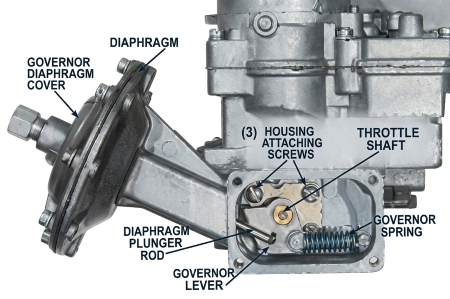
-
If your carb has a governor diaphragm housing on the side, intake vacuum can actively apply pressure to a secondary internal lever to limit throttle opening. If a spring is missing or a vacuum line is hooked up incorrectly, the vacuum might be locking out the throttle.
-
The Fix: Trace the linkage on the outside of the carburetor while the engine is idling. Is a vacuum pod plunger extending and physically blocking the throttle arm from moving forward?
Next Steps to Troubleshoot
Before pulling the carb a third time, try this test:
-
With the engine running at idle, don't push the gas pedal. Instead, go under the hood and try to rotate the throttle lever directly by hand right at the carburetor.
-
If it feels completely locked up, turn the engine off and try it immediately. If it instantly moves freely, you are definitely dealing with either throttle shaft binding from vacuum or gasket interference.
Take a close look at that base gasket and check for shaft play—one of those two is almost certainly locking you down! Let me know what you find when you wiggle that shaft.
