
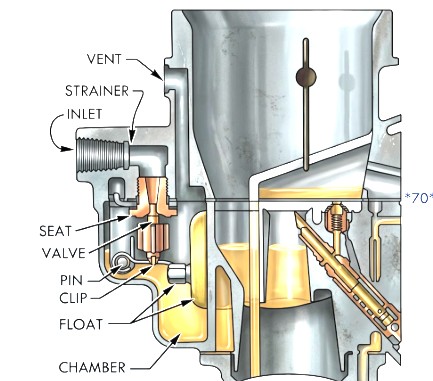
The Stromberg AAV is a dual-barrel, down-draft carburetor that utilizes a classic float-and-needle system to maintain a constant fuel level—a critical requirement for consistent engine performance.
Here is a breakdown of how the components in your diagram work together:
1. The Fuel Entry (Inlet and Strainer)
Fuel is delivered from the fuel pump into the Inlet. Before it reaches the sensitive valve components, it passes through a Strainer (screen). This is a crucial first step to prevent any sediment or debris from lodging in the needle valve, which would cause the carburetor to overflow or "flood." If no strainer is available install an inline filter between the fuel pump and the carburetor.
2. The Metering Valve (Seat and Valve)
The core of the system is the Valve (needle) and Seat.
-
When the fuel level in the Chamber is low, the needle drops away from the seat.
-
This opens a passage, allowing fuel to flow from the inlet into the chamber.
-
As fuel fills the chamber, the buoyancy of the Float pushes the needle back up into the seat, cutting off the flow once the predetermined fuel level is reached.
3. The Float and Pin
The Float is typically made of soldered brass. It is hinged on a Pin.
-
The Clip: You'll notice a small Clip connecting the float arm to the needle. This is a safety feature; it ensures that if the needle gets "sticky" due to old fuel (varnish), the weight of the dropping float will physically pull the needle down to unstick it. This clip may not be on all models. The needle must accommodate this.
-
Float Level: The height at which the float shuts off the fuel is adjustable. By slightly bending the tang (the metal arm) of the float, technicians can set the exact fuel level required for the engine's specifications. Do not fudge the setting. Some will try to fix a problem like flooding by fudging the float setting. This is only covering up the real problem.

4. The Venting System
The Vent (shown at the top) is vital for atmospheric balance.
-
It ensures that the pressure inside the fuel chamber is the same as the pressure entering the carburetor throat.
-
Without this vent, a vacuum could form as fuel is used, preventing more fuel from entering, or pressure could build up (from heat), forcing too much fuel into the engine.
5. Summary of the Cycle
-
Engine consumes fuel: The level in the Chamber drops.
-
Float drops: The Float pivots on the Pin, pulling the Valve down.
-
Refilling: Fuel rushes through the Inlet and Seat.
-
Shut off: As the level rises, the Float rises, pushing the Valve into the Seat to stop the flow.
If this system fails (usually due to a heavy "sunk" float or a worn needle), the carburetor will "flood," leading to hard starting, stalling, and fuel leaking out of the top of the air horn.
Test the float: Shake it to see if it is holding gas. Immerse into hot water to see if there are any bubbles coming from a leak. The brass float can be soldered but the weight must be close to the same. Very hard to do.
Setting Stromberg AAV Float:
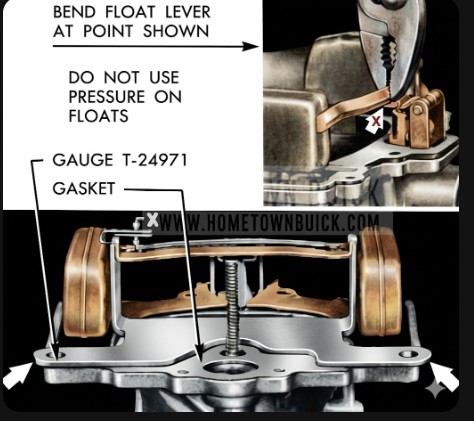
Both pontoons should be at the same height. If you don't have a measurement then set them level to the top cover edge.
Be sure both pontoons are centered.
The tool illustrated is not available. A steel ruler can be used.
