
Main Air Bleed Plugged?
 There was a question about the air bleed the sits on the top of the float bowl. That is the round brass plug with a small hole in the center. This is located above the main circuit delivery passage and the plug should be domed with a small hole in the middle. These are not removable and if damaged just make sure the hole is there and if closed try to open it up with a piece of wire. That is what really matters.
When plugged the engine won't idle and if missing, or the hole is too big, then the engine may not gain speed because of too much air going to the main circuit.


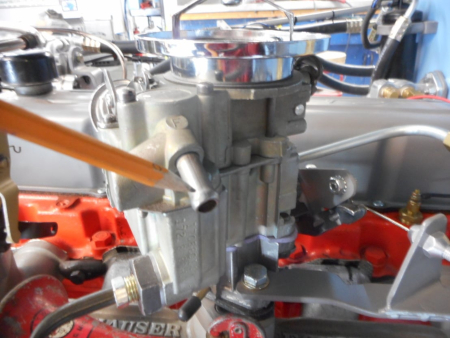
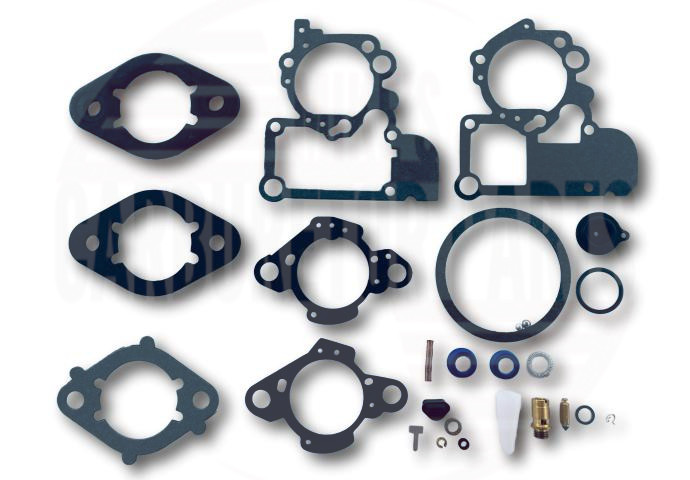
There was a question about the air bleed the sits on the top of the float bowl. That is the round brass plug with a small hole in the center. This is located above the main circuit delivery passage and the plug should be domed with a small hole in the middle. These are not removable and if damaged just make sure the hole is there and if closed try to open it up with a piece of wire. That is what really matters. When plugged the engine won't idle and if missing, or the hole is too big, then the engine may not gain speed because of too much air going to the main circuit.
Gas leaks from the float bowl gasket.
He may have set the float level to high or his Nitrophyl float is heavy and is causing the main body to over fill. The Monojet is not prone to warpage like its older brother (the "B"), but it still can if screws are over tightened. If it is a warp problem he can try two gaskets or lightly coat the sealing surface of the gasket (both sides) with a light coat of Permatex #3(aviation form-a-gasket). It is in most parts stores in a small can w/brush. Its unaffected by gas or oil.
This is the bowl vent and should be attached via a hose to the PCV.
Gas Drips Into the Bore After Turning Engine Off
Chances are it's the main discharge. Make sure there is a check ball in the discharge hole and a spring on top of this. If it's all there, then using a brass drift punch, tap on the check ball to seat it into the hole. Make sure the check ball is the bigger check ball. Should be about 1/8" diameter.
The main discharge has the T, which holds the check ball down.
Test by filling the bowl with mineral spirits (on the bench), hold the check ball down and pump the gas. Gas should not leak by the check ball and out the main discharge.
The wrong gas cap (unvented) can cause pressure in the gas tank forcing gas into the carburetor and out the discharge.
Some carburetor have a vent tube leading out of the top of the float bowl and into the PCV valve. It cannot be plugged. Earlier carburetor vented to the air. Be sure this vent isn't obstructed.
Flooding
Doesn't Start Without Adding Gas to The Carburetor
- Look down the carburetor and pump the gas once (engine off). You should see a squirt of gas which is needed to get the engine going. If no squirt then the main discharge isn't working. Did you put the check ball, then the spring in the main discharge? Blow through the main discharge to see if it comes out of the accelerator pump well.
- Test the pump by filling the float bowl with mineral spirits and pushing the pump down into the well. Gas should come out of the main discharge.
- Float bowl is not filling up - Float level not set, or float is sticking. The Monojet float bowl doesn't leave the float much room and can rub the side of the bowl.
- Needle & seat sticking closed - Needles sometimes have residue due to manufacturing. They might stick until the gas gets is washed off. Wiping with mineral spirits will remove any residue. The needle's viton tip may have been damaged while adjusting the float. Don't put pressure on the needle when adjusting the float.
- A weak fuel pump will keep the float bowl from filling up. Test the pump for 3-5 psi.
