
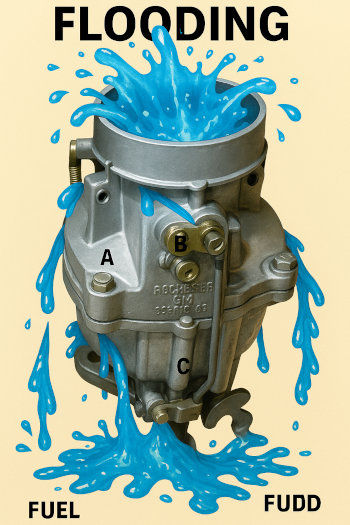
Flooding in a Rochester B 1-barrel carburetor typically happens when too much fuel enters the float bowl or intake manifold. Here are the most common causes:
Common Causes of Flooding – Rochester B 1-Barrel Carburetor
1. Float Level Too High
-
If the float is set too high, it allows excess fuel into the bowl, which can spill into the throat.
-
Fix: Adjust the float to the correct specification. Refer to the instruction sheet to get the correct speciation for your vehicle.
2. Stuck or Leaking Needle & Seat
-
Dirt, wear, or debris can prevent the needle from sealing, causing continuous fuel flow.
-
Fix: Clean or replace the needle and seat. Always inspect during a rebuild.
3. Float Saturated or Leaking
-
Brass floats can develop pinholes and absorb fuel, making them too heavy to regulate properly.
-
Fix: Shake the float near your ear—if you hear fuel sloshing inside, replace it. You can also heat up some water and immerse the float, looking for bubbles.
4. High Fuel Pressure
-
The Rochester B is designed for 4–5 PSI. More than this can overpower the needle and seat.
-
Fix: Install a fuel pressure regulator if running an electric pump or performance mechanical pump. Install between the fuel pump and the carburetor.
5. Worn or Missing Vent Valve
-
A blocked or missing bowl vent can trap pressure inside, forcing fuel through jets or vents.
-
Fix: Verify the vent passages are clear and components are intact.
6. Choke Malfunction
-
If the choke plate sticks closed, it can create a rich condition and mimic flooding.
-
Fix: Make sure the choke opens properly when warm.
7. Accelerator Pump Discharge Leaking
-
If fuel leaks out of the pump circuit during idle or low RPM, it may contribute to flooding symptoms.
-
Fix: Rebuild or replace worn pump diaphragm and check ball. Also try gently tapping on the check ball to make sure it is seating.
Diagnostic Tips:
-
Check for black smoke at idle or hard starting when hot.
-
Inspect spark plugs for wet, black deposits.
-
Remove the top of the carburetor and check fuel level or leaks after shutdown.
