
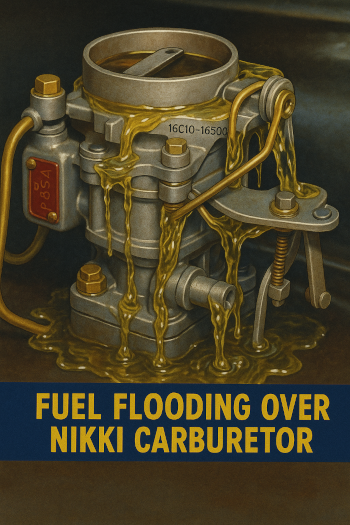
Nikki Carburetor Flooding – Causes, Symptoms, and Fixes
If your vehicle uses a Nikki carburetor and you're experiencing fuel flooding issues, you're not alone. Flooding is a common problem that can lead to hard starts, poor fuel economy, black smoke, or engine stalling. This article will walk you through the most common causes of Nikki carburetor flooding, how to diagnose the problem, and provide troubleshooting steps to fix it.
What Is Carburetor Flooding?
Carburetor flooding occurs when excessive fuel enters the intake manifold, disrupting the air-fuel mixture and causing the engine to run too rich—or not run at all. On a Nikki carburetor, flooding typically results from fuel leaking past the needle and seat, stuck floats, or improper float level adjustment.
Common Causes of Nikki Carburetor Flooding
1. Stuck or Saturated Float
The float controls fuel flow by opening and closing the needle valve. If the float is stuck, heavy from fuel saturation, or misaligned, it can cause fuel to continuously overflow into the bowl.
2. Worn Needle and Seat
A worn or damaged needle and seat will fail to shut off fuel properly, allowing it to flood the carburetor. Ethanol-blended fuels can degrade rubber-tipped needles over time.
3. Incorrect Float Level
If the float level is too high, the needle will close too late, causing fuel to spill into the venturi or flood the bowl. This is one of the most overlooked yet crucial adjustments on Nikki carburetors.
4. Debris in the Needle Valve
Small particles can prevent the needle from sealing, especially if the fuel filter is clogged or missing. Even a tiny bit of grit can hold the valve open.
5. Leaking Choke Pull-Off or Choke Not Opening
If the choke stays closed too long, it will enrich the mixture too much and contribute to flooding. A failed choke pull-off diaphragm can also lead to this issue.
Symptoms of a Flooding Nikki Carburetor
-
Strong fuel smell, especially after cranking
-
Black smoke from the exhaust
-
Engine stalls after starting
-
Fuel leaking out of the carburetor bowl vents
-
Wet spark plugs or hydro-locked engine
-
Hard starting after the engine has sat
How to Fix Nikki Carburetor Flooding
Step-by-Step Troubleshooting:
-
Inspect the Float
Remove the top of the carburetor and check if the float is sticking, saturated, or damaged. Replace it if needed. -
Check the Needle and Seat
Look for wear or grooves on the needle tip. Replace with an ethanol-resistant needle and seat if necessary. -
Set the Float Level
Measure and adjust the float to factory specifications. An incorrect float level is one of the most common causes of flooding in Nikki carbs. -
Clean the Needle Valve and Fuel Inlet
Flush with carburetor cleaner and compressed air to remove debris that could hold the needle open. -
Inspect the Choke System
Make sure the choke opens fully after startup and the choke pull-off diaphragm is working properly.
Pro Tip: Always Use a Rebuild Kit
When fixing a flooding issue, it’s best to use a complete carburetor rebuild kit that includes a new needle, seat, gaskets, and other wear parts. Ethanol-resistant parts are essential for modern fuels.
Final Thoughts
Flooding in a Nikki carburetor can be frustrating, but it's often caused by a few key issues that are easy to identify and repair. Regular maintenance, including cleaning and adjusting the float level, can prevent most problems. If you're still experiencing flooding after troubleshooting, a full rebuild or professional inspection may be necessary.
