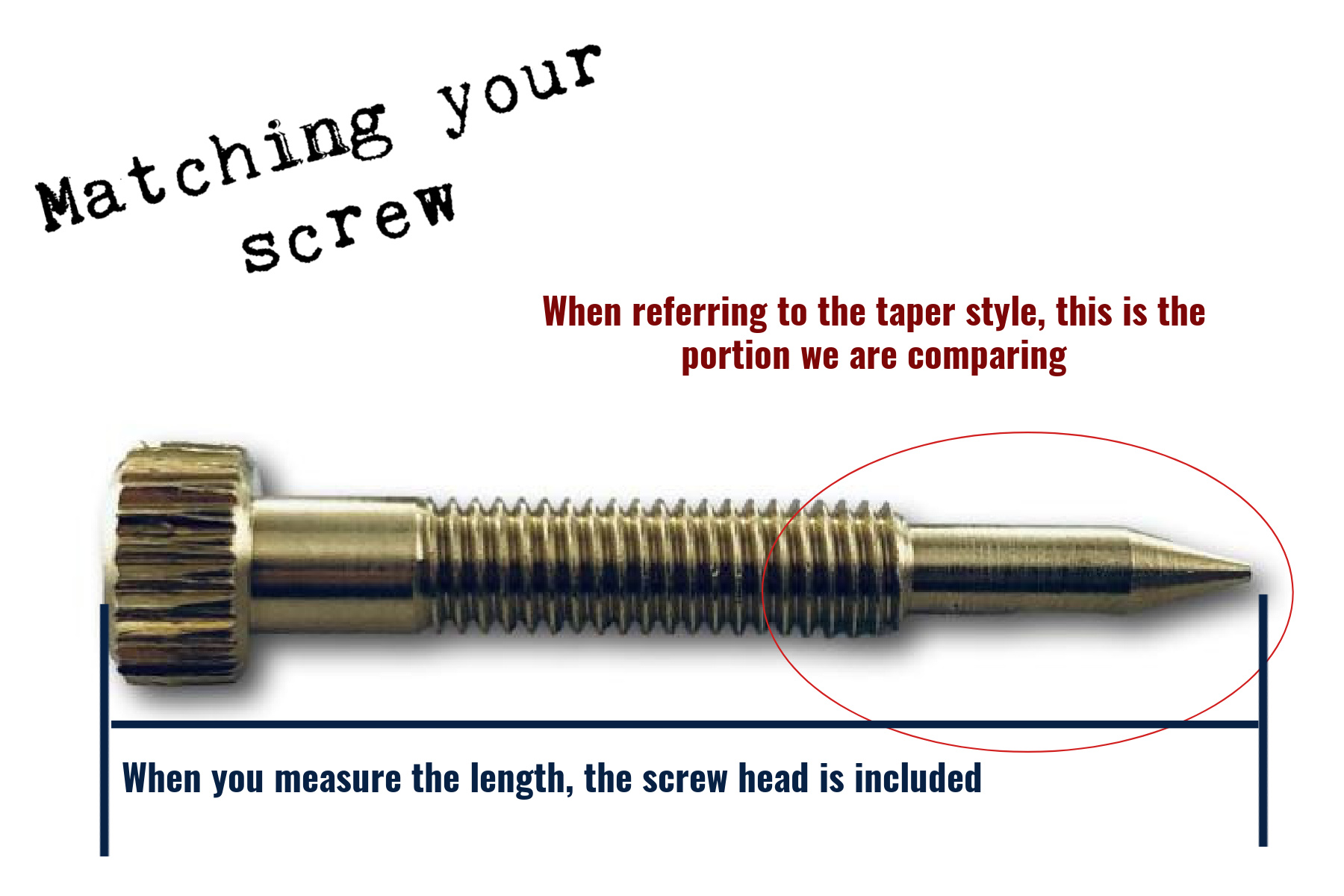
How to Adjust Idle Mixture Screws on a Carburetor – General Guide
Idle mixture screws are a key component in tuning a carburetor for proper fuel-air ratio at idle RPM. Understanding how they function and how to properly adjust them ensures smoother idle, better fuel efficiency, and easier cold starts.
What Do Idle Mixture Screws Do?
Idle mixture screws regulate the fuel-to-air mixture when the engine is idling. Once the engine RPM increases above idle, the carburetor transitions to the main circuit, and the idle mixture screws no longer have an effect.
Number of Idle Mixture Screws by Carburetor Type
Single-barrel carburetors: Typically have one idle mixture screw.
Two-barrel and four-barrel carburetors: Usually include two idle mixture screws—one for each primary barrel.
Exception – Mercarb 2-Barrel Marine Carburetor: This model uses a single idle mixture screw located in the center of the mounting flange.
How to Adjust Idle Mixture Screws
Turn clockwise (in) to lean the mixture (less fuel, more air).
Turn counterclockwise (out) to enrich the mixture (more fuel, less air).
Turning the screw all the way in should cause the engine to stumble or stall.
Tip for Rochester Quadrajets: Use a flexible idle mixture adjusting tool, available at most auto parts stores, to make precise adjustments with limited clearance.
Idle Mixture Screw Prep During a Rebuild
When rebuilding your carburetor:
Clean the screws by gently buffing to remove fuel residue.
Inspect for damage:
Check the needle tip for wear or grooves.
Check the threads for corrosion or damage.
Replace any worn or damaged screws.
Shop replacement idle mixture screws here
Setting the Screws During Assembly
When reassembling your carburetor:
Gently turn the idle mixture screws all the way in until they just seat.
Then back them out 1½ turns as a baseline setting.
Do NOT overtighten—this can damage the screw tip or the carb body.
Final Idle Mixture Adjustment Tips
After installation, fine-tune the idle mixture with the engine running:
Start the engine and bring it to full operating temperature.
Ensure the choke valve is fully open.
Rev the engine slightly to release the fast idle cam, allowing it to return to normal idle position.
From here, adjust each idle mixture screw incrementally (1/8 turn at a time) until you achieve the highest, smoothest idle RPM without stalling.
Adjust the idle to specification.
There are a couple of ways to adjust the idle mixture.
1. Using a vacuum meter
Hook the vacuum meter to one of the vacuum ports on the intake, or the carburetor.
Take turns with each idle mixture screw.
Turn each screw out a bit for a start (maybe 1 turn).
Turn each screw in 1/4 of a turn and wait for a second for the vacuum meter to catch up.
Do this until you get the smoothest idle and the vacuum meter stays steady.
2. By ear
Turn the mixture screws, alternating between the two in 1/4 turn at a time until the engine rpm starts to drop, then turn them back out 1/4 of a turn.
- blocked idle passage - Passageways are small and ethanol leaves deposits behind that soaking and air won't always get out. Use a nylon brush when needed to clear deposits in the idle passage. If you blow into the passage from the screw port, you should feel air come out the carb bore.
- damaged or bent screws - purchase new screws and springs anytime you see grooves in the screw tip or thread
- vacuum leak - most common around the base of the carb between the carburetor and manifold, but a vacuum leak can occur at any point of contact.
- idle RMP that is set too high If you have the idle RPM set too high, your idle mixture adjustment will be irrelevant. When you turn the idle mixture screw in all the way and the engine doesn't change, you could have the idle RPM set too high.