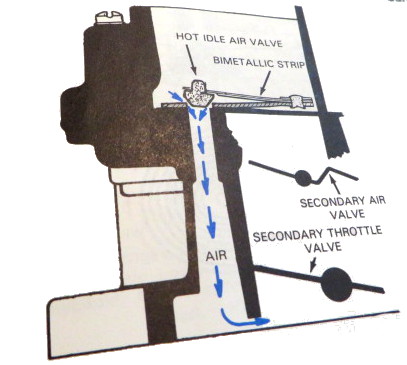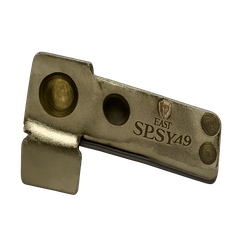
How the Hot Idle Compensator Works - these are not generally available and are not produced anymore.
The hot idle compensator works by adding air, not fuel.
At its core is a bimetallic spring—a temperature-sensitive element that reacts directly to engine heat.
Here’s the sequence:
-
Engine temperature increases
-
Heat causes the bimetal spring to contract
-
The contraction opens an air valve or passage
-
Extra air is drawn into the intake or idle circuit
-
The idle mixture is leaned out
-
Engine idle stabilizes and smooths out
Once the engine cools, the spring relaxes, the valve closes, and the carburetor returns to its normal idle calibration.
No electronics. No vacuum signal tricks. Just physics and temperature.
Where You’ll Find It
Hot idle compensators were commonly used on:
-
Carburetors from the 1960s–1980s
-
Vehicles with factory air conditioning
-
Engines prone to heat soak
-
Emissions-era carburetors that already ran rich at idle
They are usually mounted:
-
On the carburetor body
-
Near the idle or air horn area
-
Sometimes externally visible, sometimes hidden behind a small cover
Symptoms of a Bad or Stuck Idle Compensator
When the compensator fails, it usually fails mechanically, not electrically.
Common problems include:
-
Stuck closed ? engine runs rich when hot
-
Stuck open ? lean idle or high idle when cold
-
Broken or fatigued bimetal spring
-
Dirt or varnish preventing valve movement
Typical symptoms:
-
Engine stalls only when hot
-
Rough idle at stoplights
-
Runs fine at cruise speed
-
No improvement from idle mixture screw adjustments
Why Modern Vehicles Don’t Use Them
You won’t see hot idle compensators on modern engines—and for good reason.
Fuel-injected vehicles rely on:
-
Coolant temperature sensors
-
Intake air temperature sensors
-
Idle air control valves
-
ECU-controlled fuel mapping
The computer automatically adjusts idle speed and air-fuel ratio in real time, making a mechanical compensator unnecessary.
In short: the ECU replaced the idle compensator.
Bottom Line
The hot idle compensator is a smart, purely mechanical solution to a very real carburetor problem—heat-induced rich idle and stalling.
If you’re working on a vintage carbureted engine, especially one with air conditioning, understanding (and checking) the idle compensator can save you from endless idle mixture tweaks that never quite fix the problem.
It doesn’t add fuel.
It doesn’t raise idle speed directly.
It simply adds air when heat demands it—and when it works, it works well. optimal air-fuel mixture regardless of engine temperature or operating conditions.