
The Holley 2280 is a 2-barrel carburetor that was primarily used on Chrysler vehicles during the 1970s and 1980s. One of its important features is the choke system, which is used to provide a richer fuel mixture when starting a cold engine. Here's a general overview of the choke system on the Holley 2280:
-
Choke Types: The Holley 2280 could come with different choke setups. The two most common are the electric choke and the divorced (or mechanical) choke.
-
Electric Choke: This type uses an electric heating element that warms up and gradually opens the choke plate as the engine warms up. The electric choke usually has a positive (usually a keyed +12V source so it's only on when the vehicle is on) and a ground connection. When electricity is supplied, the heating element warms up and moves the choke mechanism.

-
Divorced Choke: In this setup, the choke mechanism is not directly on the carburetor but is instead attached to the intake manifold. It uses a thermostatic coil that responds to the heat of the engine. As the engine warms up, the coil expands or contracts to adjust the choke plate.
-
-
Choke Adjustment: Proper choke adjustment is crucial for the engine to run efficiently during cold starts.
-
For an electric choke, the black plastic choke cap on the side of the carburetor can typically be rotated to adjust the choke operation. Rotating the cap will change when the choke comes off as the engine warms up.
-
For a divorced choke, adjustments can be made by bending the connecting rod slightly or repositioning the thermostatic coil.

-
-
Function: When the choke is activated (usually when the engine is cold), it restricts the amount of air entering the carburetor. This creates a richer air/fuel mixture which aids in starting and running a cold engine. As the engine warms up, the choke plate should gradually open, allowing more air into the carburetor and leaning out the mixture.
-
Maintenance: Like any other component, the choke system needs periodic maintenance.
- Check the choke linkage for free movement. It should not be sticky or binding.
- For electric chokes, make sure the electrical connections are secure and that the heating element is working.
- For divorced chokes, ensure the thermostatic coil is in good condition and free from rust or damage.
-
Issues: If the choke doesn't operate correctly, you might experience hard starting in cold conditions, black smoke from the exhaust (due to a rich mixture), or poor fuel economy.
In summary, the choke system in the Holley 2280 carburetor is an essential part of ensuring smooth cold starts and efficient engine operation. Regular inspection and adjustment of the choke mechanism can ensure your engine runs at its best. If you're unfamiliar with carburetor adjustments or maintenance, consulting with a mechanic or referencing a service manual is advisable.
Holley 2280 Choke PullOff Adjustment
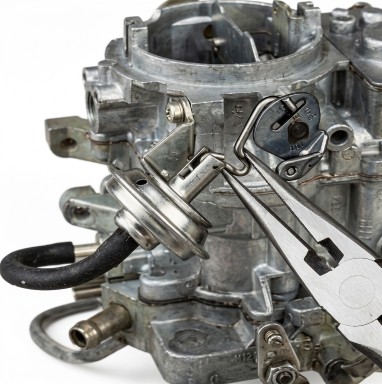
Adjusting the choke pull-off (also known as the vacuum break) on a Holley 2280 2-barrel carburetor is essential for smooth engine operation during cold starts. The choke pull-off controls the opening rate of the choke plate after the engine starts, ensuring the right air/fuel mixture. Here's a step-by-step guide on how to adjust it:
-
Safety First:
- Ensure the engine is turned off and has cooled down to avoid burns.
- Disconnect the battery to ensure the engine doesn’t start accidentally during adjustments.
-
Locate the Choke Pull-Off:
- Find the choke pull-off on the carburetor. It's a small diaphragm unit with a rod connected to the choke mechanism.
-
Initial Check:
- Start the engine and allow it to reach operating temperature.
- Turn off the engine.
- Observe the position of the choke plate. It should be fully open. If not, other parts of the choke system may need adjustment or repair.
-
Disconnect the Pull-off Rod:
- Carefully disconnect the rod that connects the pull-off diaphragm to the choke linkage.
-
Check Diaphragm Movement:
- Using a handheld vacuum pump, apply vacuum to the choke pull-off diaphragm. The diaphragm should move, and hold its position as long as vacuum is applied. If it doesn't hold, the diaphragm might be leaking and needs replacement.
-
Adjust the Pull-off:


-
Reconnect the Pull-off Rod:
- Once adjusted, reconnect the pull-off rod to the choke linkage.
-
Test:
- Reconnect the battery.
- Start the engine when it's cold. The choke plate should initially be closed and then quickly open a small amount due to the pull-off action. As the engine warms up, the choke plate should continue to open fully.
- If the engine is too rich (or stalls) right after starting, the pull-off might be opening the choke too much. If the engine seems to struggle or runs too lean, the pull-off might not be opening the choke enough.
-
Fine-Tuning:
- Based on the engine's behavior, fine-tune the choke pull-off adjustment if needed.
-
Recheck All Connections:
- Make sure all connections and linkages are secure before concluding.
Adjusting the choke pull-off on the Holley 2280 can make a noticeable difference in how the engine runs during its warm-up phase. If you're ever uncertain about the adjustments, refer to a service manual specific to your carburetor or consult with a mechanic familiar with carbureted systems.
