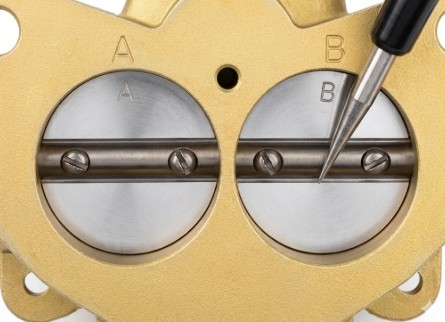
The Holley 2210 is a two-barrel (2-V) carburetor, most famously used on International Harvester and some Chrysler products. The throttle valves (often called throttle plates or butterflies) are the circular brass discs located at the very bottom of the carburetor in the throttle body.
Here is a breakdown of their design and function:
1. Physical Characteristics
-
Material: The valves are made of brass. Brass is used because it is corrosion-resistant and softer than the cast iron or aluminum throttle body, which helps prevent the plates from "digging" into the bores.
-
Beveled Edges: The edges of the plates are precision-beveled. This ensures that when the throttle is closed, the plates seat firmly against the throttle bores to create a consistent seal for idling.
-
Orientation Marks: You will often see a small number or a letter stamped on the face of the valve. When installing them, these marks usually face down toward the intake manifold and toward the edge of the bore to ensure they are centered correctly.
2. Mounting and Alignment
-
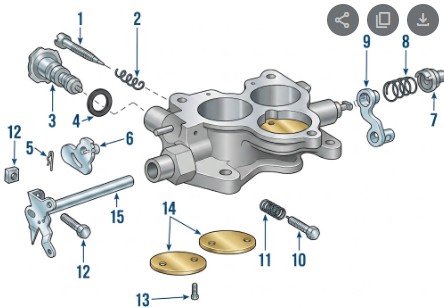
The Throttle Shaft: Both valves are mounted to a single steel throttle shaft. They are held in place by two small screws per valve.
-
Split Shaft Design: The shaft is typically "split" or slotted so the valves slide into the center of the shaft, ensuring they are perfectly centered before the screws are tightened.
-
Staked Screws: From the factory, the ends of the brass screws are "staked" (flattened) on the back side. This is a safety feature to prevent the screws from vibrating loose and being sucked into the engine.
3. Functional Interaction
-
Idle Port Relationship: The position of the throttle valves at idle is critical. They must be open just enough to expose the idle transfer slots. If the valves are open too far at idle, the carburetor will "pull" too much fuel from the main circuit, causing a stumble.
-
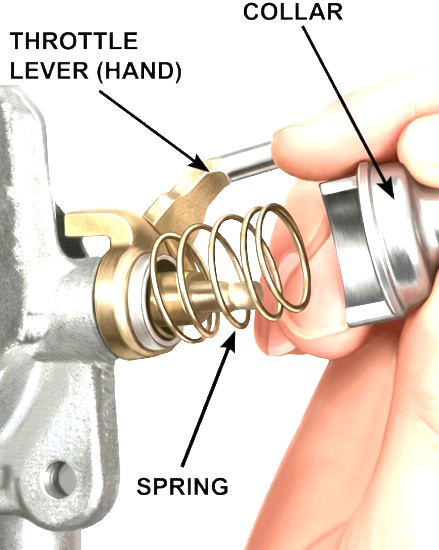
Throttle Return: The valves are spring-loaded via a return spring on the exterior linkage to ensure they snap shut immediately when you let off the accelerator.
4. Common Issues to Watch For
-
Carbon Buildup: Over time, "gunk" builds up on the edges of the brass plates. This prevents them from closing fully, leading to a high or erratic idle.
-
Worn Bushings: If the throttle shaft (which holds the valves) develops "slop" in the housing, the valves won't center properly. This creates vacuum leaks and makes the carburetor nearly impossible to tune.
-
Bent Plates: If the engine has ever backfired through the carburetor, it is possible for the thin brass plates to slightly warp or bend, which ruins the seal at idle.
Pro-Tip for Rebuilding: When reinstalling these valves, never tighten the screws until you have "seated" the valves. Close the throttle fully, tap the plates lightly to center them in the bores, and then tighten and re-stake the screws.