
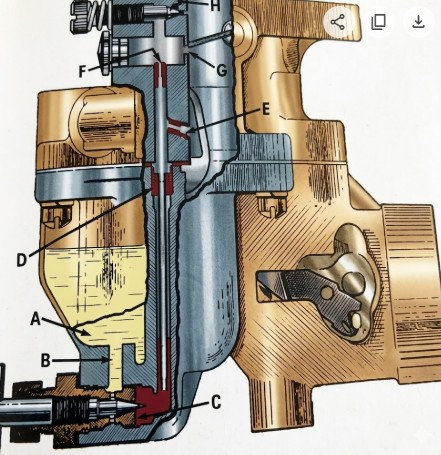
The Carter UT float system is a constant-level fuel supply mechanism designed to maintain a precise amount of gasoline in the carburetor bowl, ensuring that all other circuits (Idle, High-Speed, etc.) function correctly.
In your uploaded diagram, the float bowl is the large chamber on the left side (highlighted in light blue in the colorized version), housing the float assembly and the fuel inlet.
1. Primary Components
The Float: A hollow brass or synthetic member that rests on top of the fuel. It rises and falls as the fuel level changes.
Needle and Seat: Located at the fuel inlet (often at the top of the bowl). The float lever is attached to a needle valve; when the float rises, it pushes the needle into its seat to stop fuel flow.
Float Bowl: The reservoir that stores a "standing" volume of fuel.
Vents: The UT is typically "vented" to the atmosphere or the air horn to ensure that the air pressure inside the bowl stays consistent, allowing atmospheric pressure to push fuel through the jets when a vacuum is created in the venturi.
2. How the System Works
The operation is similar to a toilet tank valve:
Fuel Entry: As the engine consumes fuel, the level in the bowl drops, causing the float to lower.
Opening the Valve: As the float lowers, the needle valve moves away from the seat, allowing fuel from the fuel pump or gravity tank to enter the bowl.
Maintaining Equilibrium: As fuel fills the bowl, the float rises until the needle is pushed firmly back into the seat, shutting off the supply once the "predetermined level" is reached.
3. Critical Settings and Maintenance
The float system is the foundation of the carburetor's tuning. If it is malfunctioning, the rest of the carburetor cannot be adjusted properly.
