
How the Edelbrock Secondaries Work:
Dual-Plane Mechanical Linkage:
The primary and secondary throttle plates are linked mechanically.
When you press the accelerator pedal, both primary and secondary throttle plates begin to open together — but...
Air Valve (Weighted Secondary Door):
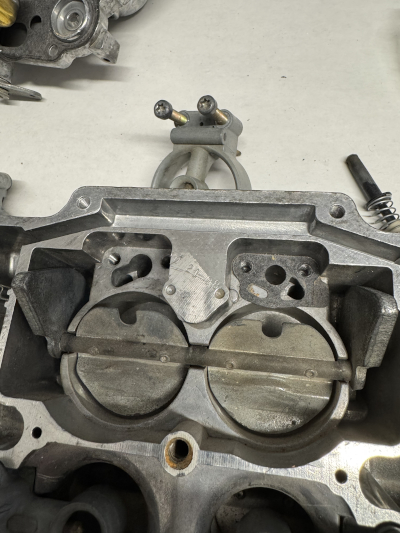
The key to how the secondaries actually function lies in the air valve door above the secondary throttle plates.
This is a weighted flap (springless) that only opens when engine airflow demands it.
Even if the throttle plates open fully, the secondaries won’t deliver extra fuel unless enough air velocity flows through the secondary side to push open that air door.
This prevents bogging or lean conditions when stomping the throttle at low RPMs.
Fuel Delivery Controlled by Airflow:
As the air valve opens due to increasing airflow, it activates the fuel metering rods and jets in the secondary side.
That way, you only get more fuel when your engine actually needs more air — a sort of "vacuum demand" system without vacuum diaphragms or springs.
Advantages of This System:
No tuning required for secondary engagement (unlike Holley vac-secondaries that may need lighter springs).
Smooth power delivery – it won’t dump too much fuel at low RPM.
Less chance of bogging, since fuel comes only when airflow supports it.
TIP: How to Test if the Secondaries Are Working
With the engine off, open the throttle fully and look down the carb with the air cleaner off.
Manually lift the air valve with your finger — it should move with light resistance and fall back under its own weight.
During a hard pull (like WOT in 2nd gear), the air valve should open — you can sometimes hear a “second wind” sound if it's working properly.
