

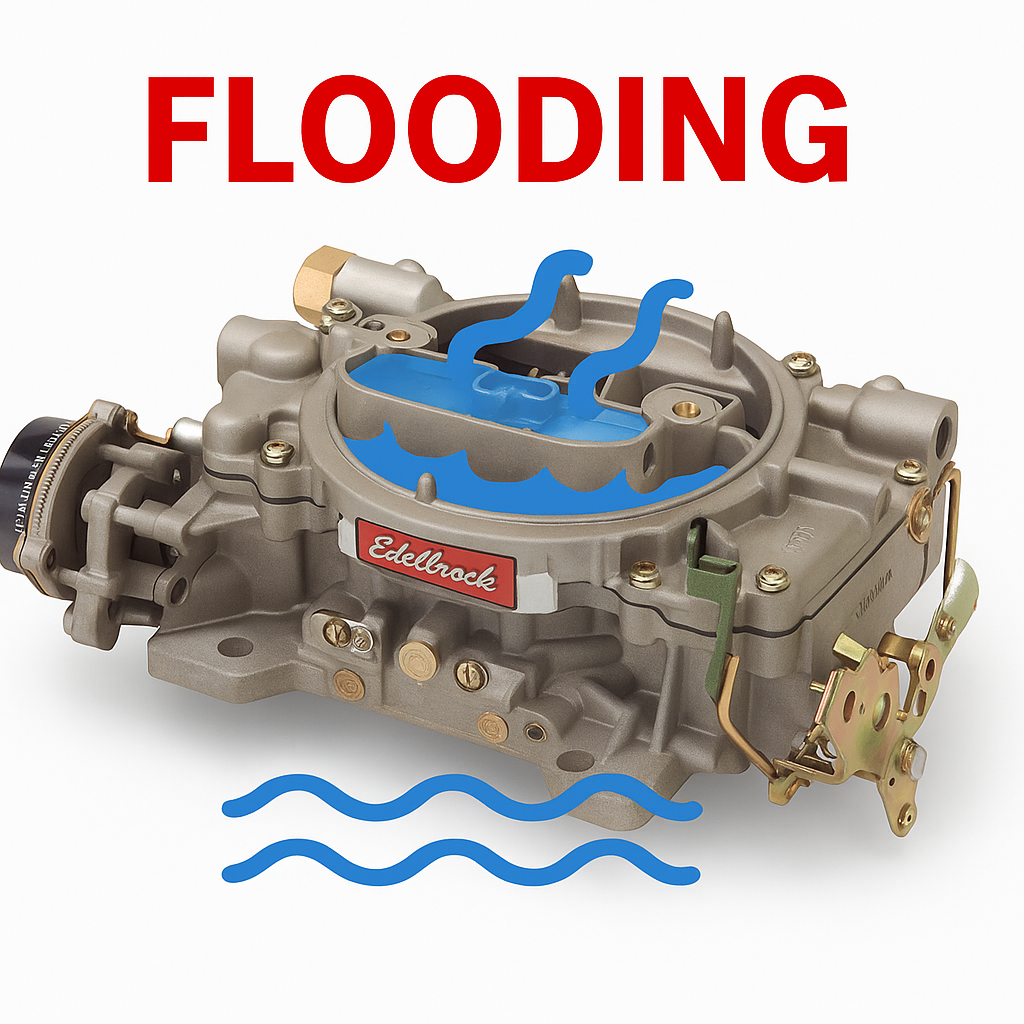
How the Edelbrock Needle & Seat Can Cause Flooding
Flooding is one of the most common and frustrating issues that can affect an Edelbrock carburetor. If your engine is hard to start, smells strongly of gasoline, or fuel is leaking from the carb, there's a good chance the needle and seat are to blame. Understanding how this small component works—and how it can fail—is key to diagnosing and fixing the problem.
What Is the Needle and Seat?
In a carburetor, the needle and seat assembly controls the flow of fuel into the float bowl. It works like a valve:
The needle is a pointed piece (often metal or rubber-tipped) that fits into the seat, a small brass or aluminum orifice.
As the fuel bowl fills, the float rises, pressing the needle into the seat and shutting off fuel flow.
When fuel is used and the level drops, the float falls, opening the valve and allowing more fuel in.
This system maintains a steady fuel level—unless something goes wrong.
How It Causes Flooding
When the needle and seat don’t seal properly, fuel keeps flowing into the float bowl even after it's full. Eventually, it overflows and enters the intake manifold uncontrollably. Here’s how that can happen:
1. Worn or Damaged Needle
The tip of the needle can wear out or become grooved over time.
A rubber-tipped needle can harden or degrade, losing its ability to seal tightly.
2. Debris or Contamination
Dirt, rust flakes, or old fuel varnish can lodge between the needle and seat.
Even a tiny particle can hold the needle open, allowing fuel to pass through.
3. Improper Float Adjustment
If the float is set too high, the needle may not fully seat before the bowl overfills.
Incorrect float height = incorrect fuel level.
4. Sticking Needle
If the needle binds or the float sticks, fuel won’t be regulated properly.
Ethanol in modern fuel can cause rubber parts to swell and stick.
