

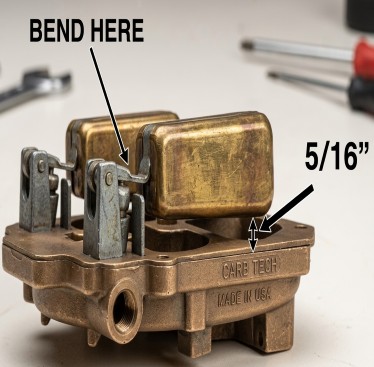
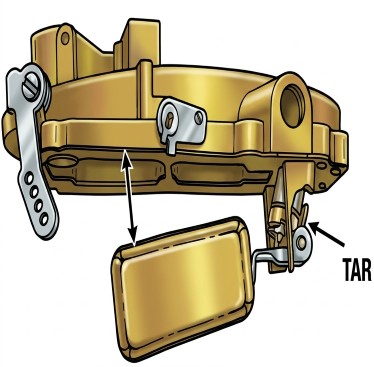
Are the floats below interchangeable?
No, the older, larger floats cannot be interchanged with the newer, smaller ones.
Here is why keeping the correct float size is critical for proper carburetor operation:
-
Buoyancy and Fuel Volume: Float buoyancy is directly determined by its total volume and displacement.
A larger float displaces more fuel and generates significantly more lifting force to overcome fuel pump pressure and seat the fuel needle. Putting in a smaller float will lack the necessary buoyancy, preventing the needle from seating fully and causing the carburetor to flood. -
Float Bowl Clearance: Carburetor float bowls are precisely cast to clear the specific dimensions of the original float design.
A larger float in a smaller bowl cavity will rub or bind against the bowl walls, causing the float to stick open or closed. -
Leverage and Travel Geometry: The geometry of the float arm, pivot loop, and adjustment tang are calibrated to a specific float mass and buoyancy profile.
Mixing sizes alters the fuel level calibration dramatically, causing severe running issues, fuel starvation, or over-rich mixtures.
Always match the float dimensions (toe height, length, and width) to your original unit or verified carburetor model number to maintain a stable fuel level.
