

Why Won't My YF Idle?
Make sure the idle is at specified RPM when adjusting the idle mixture screw. Once the RPM gets over the idle speed, the idle circuit is bypassed.
Take the screw out and make sure the hole is clear. Screw should not have any scoring.
There are 2 holes in the bore, one at the idle screw and one above. The above hole should be clear.
The idle tube should be clear. This is the tube that screws into the float bowl with the top off.
There is an air bleed hole in the bowl close to the top of the idle tube. Make sure that is open.
Perhaps the throttle shaft is worn and leaking too much air. Use carburetor cleaner and spray around throttle shaft. If the RPM smooths out, you found a vacuum leak and will have to re-bush the throttle shaft.
Was the throttle plate removed & replaced? It could have been installed backwards.
A strong smell of fuel could indicate a flooding condition.
A rough idle can also be caused by a vacuum leak. Spray carburetor cleaner around the mounting gasket, intake manifold and any other vacuum source.
Adjusting Idle Mixture
- If your engine is stumbling at idle or running rich, it might be time to adjust the idle mixture screw on your Carter YF carburetor. Here’s exactly how I do it to dial things in just right.
- First things first — make sure the engine is fully warmed up. You want it running at normal operating temperature before you touch anything.
- With engine off turn the idle mixture screw all the way in gently bottoming it. Then turn it counter clockwise 1 1/2 turns.
- Set the idle speed to manufactures recommended setting.
- Then, grab a flathead screwdriver and locate the idle mixture screw — it’s usually on the lower front of the carb.
- Now, with the engine idling, turn the screw **in** slowly, clockwise, until the engine just starts to stumble. That’s leaning out the mixture. Then back it out — counterclockwise — until the idle smooths out and reaches its highest RPM. That’s your sweet spot. You’re aiming for the highest, smoothest idle you can get **without** going too rich.
- If you’ve got a vacuum gauge, even better. Plug it into a manifold vacuum port and aim for the highest steady vacuum reading. That gives you a precise tune.
- Once you've got the mixture dialed in, adjust the **idle speed screw** if needed — usually on the throttle linkage — to bring the RPM back down to spec.
- Final check: blip the throttle a few times. The engine should return to idle smoothly without hesitation or stalling. If it does, congrats — your idle mixture is tuned.
- Get Carter YF Parts
How To Set Fast Idle

Steps to Adjust Fast Idle
- Open choke valve all the way open.
- Make sure the throttle is closed, which would be at idle position.
- The fast idle cam should just touch the flat pad on the throttle body.
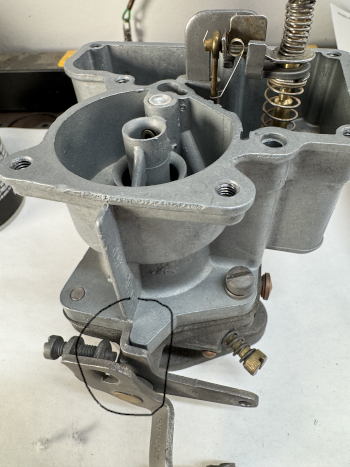
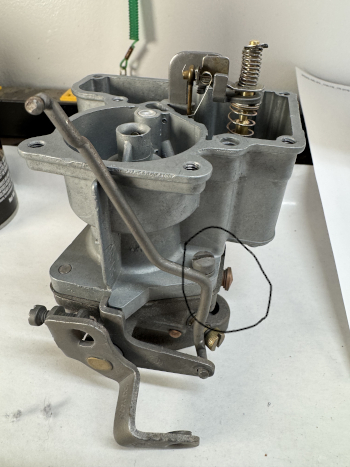
- To adjust, bent the Rod.
Common Mistakes to Avoid
Adjusting with a warm engine: The fast idle cam must be engaged, which only happens with a cold choke setting.
Too high RPM: This can cause harsh shifting in automatic transmissions and excessive engine wear.
Neglecting linkage movement: Ensure the fast idle cam moves freely and is not sticking due to dirt or wear.
Final Check
After adjustment, allow the engine to cool completely and start it from cold. Observe how the engine behaves:
It should start quickly.
RPM should rise and hold steady around the target fast idle speed.
As it warms, the RPM should gradually return to normal idle automatically.
Need Parts?
If you’re rebuilding your Carter YF carburetor or need replacement parts like a fast idle cam, choke assembly, or rebuild kit, check out Mike’s Carburetor Parts for high-quality, ethanol-resistant components.
Summary
Setting the fast idle on a Carter YF carburetor is a simple but crucial step in ensuring your engine runs smoothly during cold starts. By following these steps, you’ll improve drivability, prevent stalling, and extend the life of your engine.
