What Causes My Car to Not Start After Sitting

If your car won't start after sitting for an extended period, especially with a carbureted engine, several common issues could be the cause. Here's a comprehensive guide to help you diagnose and resolve the problem.
Common Reasons a Car Won’t Start After Sitting
1. Fuel Evaporation from Carburetor Bowl
Over time, fuel can evaporate from the carburetor bowl, leading to hard starts or no start conditions. This is particularly common in older vehicles with carburetors.
2. Clogged Carburetor Jets
Debris or varnish from old fuel can clog the jets in the carburetor, hindering fuel flow to the engine. This can prevent the engine from starting or cause it to run poorly.
3. Stale or Degraded Fuel
Fuel that has been sitting for months can degrade, losing its combustibility. This stale fuel can cause starting issues and may require draining and replacing with fresh fuel.
4. Choke Malfunction
A malfunctioning choke can lead to an improper air-fuel mixture, making it difficult for the engine to start, especially in cold conditions.
5. Fuel Siphoning from Float Bowl
Blocked or improperly vented carburetor vents can create a vacuum inside the float bowl, leading to fuel siphoning out and causing starting issues. Also a leaky main discharge can cause gas to be siphoned into the intake manifold.
6. Air Leaks in Intake System
Leaks in the carburetor or intake manifold can disrupt the air-fuel ratio, making it hard for the engine to start or run smoothly.
7. Moisture Accumulation
Moisture buildup in the fuel system can interfere with combustion, leading to starting problems.
8. Dirty Air Filter
A clogged air filter can restrict airflow to the engine, affecting the combustion process and making it difficult to start the car.
9. Battery Issues
A weak or dead battery may not provide enough power to turn over the engine, especially after the car has been sitting for a long time.
10. Sticky Throttle Linkage
The throttle linkage or butterfly valve in the carburetor may stick due to residue buildup, impeding airflow and causing starting issues.
Troubleshooting Steps
-
Inspect Fuel Quality
-
Check the fuel for signs of degradation or contamination. If the fuel smells sour or has a varnish-like appearance, drain and replace it with fresh fuel.
-
-
Examine the Carburetor
-
Inspect the carburetor for clogged jets or passages. Clean or rebuild the carburetor if necessary to ensure proper fuel flow.
-
-
Check the Choke Operation
-
Ensure the choke plate moves freely and closes properly when the engine is cold. Adjust or repair the choke mechanism as needed.
-
-
Inspect for Air Leaks
-
Examine the intake manifold and carburetor mounting for leaks. Tighten any loose connections and replace gaskets if necessary.
-
-
Test the Battery
-
Measure the battery voltage and charge or replace the battery if it's weak or dead.
-
-
Check the Air Filter
-
Inspect the air filter for dirt and debris. Clean or replace the filter to ensure proper airflow to the engine.
-
-
Examine the Throttle Linkage
-
Ensure the throttle linkage and butterfly valve operate smoothly. Clean any residue and lubricate moving parts as needed.
-
Preventive Measures
-
Regularly Start the Vehicle: Even if not in use, start the car periodically to keep the fuel system and battery in good condition.
-
Use Fuel Stabilizer: Add a fuel stabilizer to the gas tank if the car will sit unused for an extended period to prevent fuel degradation.
-
Keep the Battery Charged: Use a battery maintainer or trickle charger to keep the battery charged when the car is not in use.
-
Store in a Dry Environment: Keep the vehicle in a dry, covered area to minimize moisture buildup in the fuel system.
-
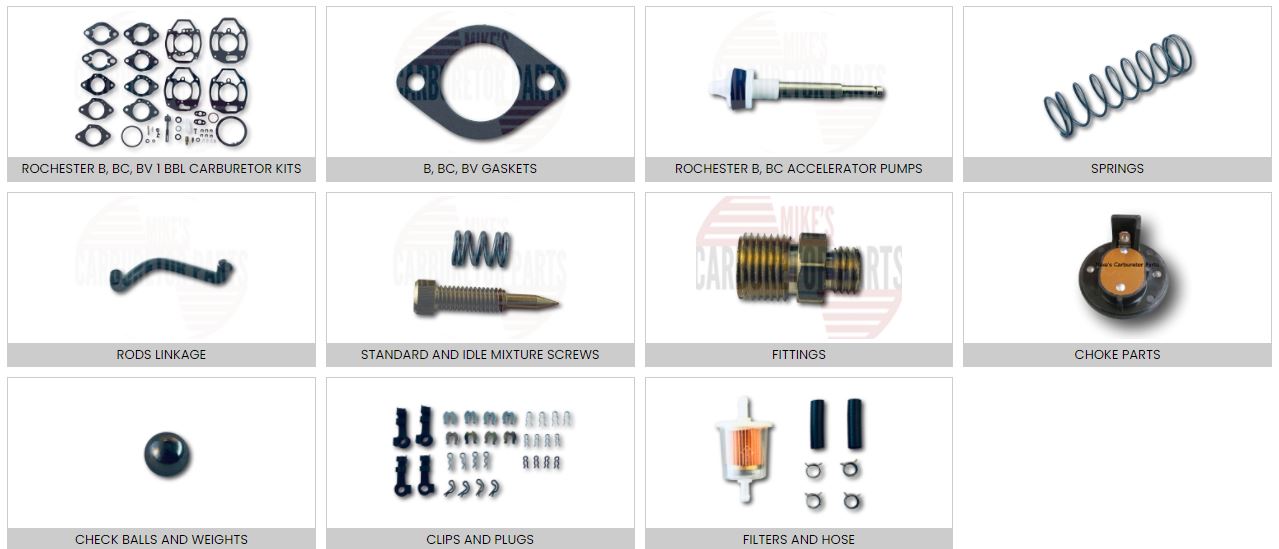
Rochester B Parts