
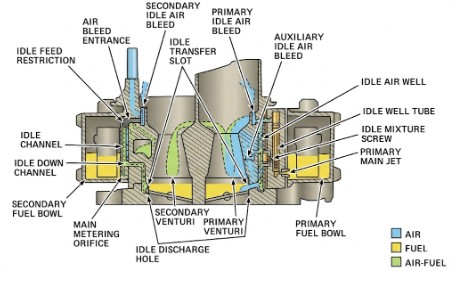
 The idle system of the Holley 4180 carburetor plays a crucial role in the engine's operation during idling and low-speed conditions. Proper functioning of this system ensures a smooth and stable idle, essential for a well-tuned engine. Atmospheric pressure in the fuel bowl moves fuel through the idle system.
 What is the Idle System?
The idle system in a carburetor is responsible for regulating the air and fuel mixture when the engine is at idle or low RPMs. At idle, the engine requires a richer air-fuel mixture to maintain a steady and smooth operation. The idle system ensures the engine receives the correct amount of fuel for idle conditions, preventing stalling and rough idling.
Components of the Idle System
The idle system in the Holley 4180 carburetor consists of the following components:
1. Idle Mixture Screws:
The idle mixture screws are located on the carburetor's metering block and control the amount of fuel delivered at idle. By turning these screws in or out, the air-fuel ratio can be adjusted for optimal performance during idle.
2. Idle Circuit:
The idle circuit is a set of passages and jets in the carburetor that deliver fuel to the engine during idle. When the throttle plate is closed, the engine relies on the idle circuit to maintain a consistent fuel flow.
3. Idle Air Bleeds:
The idle air bleeds allow air to mix with the fuel in the idle circuit. These small holes help control the air-fuel ratio and ensure proper combustion during idle. When cleaning your carburetor be sure to pay special attention to these small passages. Ethanol buildup can cause erratic idling.
4. Idle Fuel Restriction:
The idle fuel restriction is a small orifice that limits the flow of fuel into the idle circuit. Its size determines the amount of fuel delivered to the engine during idle.
Significance of the Idle System
The idle system's proper functioning is vital for several reasons:
Smooth Idling: The idle system ensures a stable and consistent idle speed, preventing engine stalling or rough idling.
Fuel Efficiency: A well-tuned idle system ensures the engine receives the right amount of fuel, promoting fuel efficiency during idle conditions.
Transition to Throttle: Above the throttle plate is the idle transfer slot. As the throttle opens this slot begins to open and provide additional air/fuel mixture. The provides a smooth transition to the main metering operation.
Engine Warm-up: During cold starts, the idle system helps maintain a rich mixture for a smoother warm-up process.
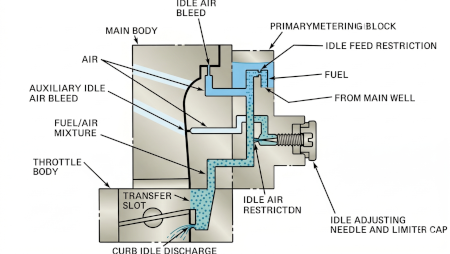
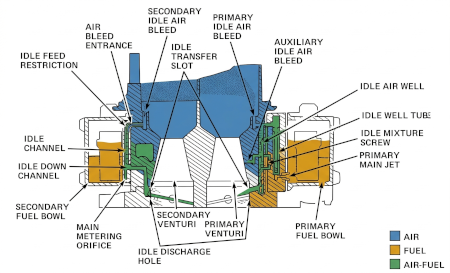
fuel restriction. However, there are two idle air bleeds. One idle air bleed is installed normally in the air
horn. An auxiliary idle air bleed is drilled into the lower skirt of the venturi. The air entering through
this passage is adjusted by an idle air adjusting screw. The screw is turned clockwise to enrich the idle
mixture and counterclockwise to lean out the idle mixture. An aluminum decal on the metering block
has an arrow which indicates the lean direction.
Tuning the 4180 Idle System
Tuning the idle system of the Holley 4180 carburetor requires precision and attention to detail. Here are some steps to tune the idle system effectively:
Engine Warm-up: Before tuning, ensure the engine is adequately warmed up to its normal operating temperature.
Idle Speed Adjustment: Set the idle speed to the manufacturer's recommended RPM using the idle speed screw.
Idle Mixture Adjustment: Turn the idle mixture screws in or out to achieve the highest and smoothest idle RPM. Fine-tune each screw equally for a balanced air-fuel mixture.
Check for Vacuum Leaks: Inspect all vacuum lines and fittings for leaks that could affect the idle system's performance. Address any leaks promptly.
Conclusion
The idle system of the Holley 4180 carburetor is a critical component responsible for maintaining a stable and efficient idle. By understanding its components and significance, you can tune the idle system for optimal engine performance. Regular maintenance and tuning of the idle system will ensure your engine runs smoothly during idle conditions, contributing to a pleasant driving experience.
Troubleshooting Holley 4180 Idle Problems
Troubleshooting the idle system on a Holley 4180 (most common on 1980s Ford 5.0L and 5.8L HO engines) requires a specific approach due to its unique emissions-era design features, such as the tamper-resistant idle mixture screws and the secondary idle air system.
1. Verify the Basics First
Before adjusting the carburetor, ensure the engine is capable of a steady idle:
-
Ignition Timing: Must be set to factory specs. If timing is retarded, the engine won't respond correctly to mixture changes.
-
Vacuum Leaks: The 4180 is extremely sensitive to vacuum leaks. Check the base gasket, intake manifold, and all vacuum lines (especially the PCV and brake booster).
-
Engine Temperature: The engine must be at full operating temperature with the choke completely open.
2. Idle Mixture Adjustments
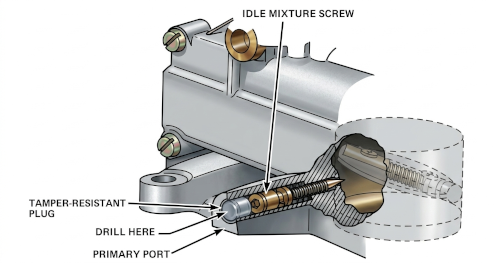
The Holley 4180 originally came with hardened steel "anti-tamper" plugs over the idle mixture screws. If these are still present, they must be carefully removed (usually by drilling a small hole and using a puller) to access the screws.
-
Baseline Setting: Gently turn the screws in until they lightly seat, then back them out 1-1/2 turns.
-
Tuning: Use a vacuum gauge connected to a manifold vacuum port. Adjust each screw (1/8 turn at a time) to achieve the highest stable vacuum reading.
-
Balance: Both screws must be adjusted equally. If turning the screws doesn't change the idle quality, the idle circuit is likely clogged with varnish or debris.
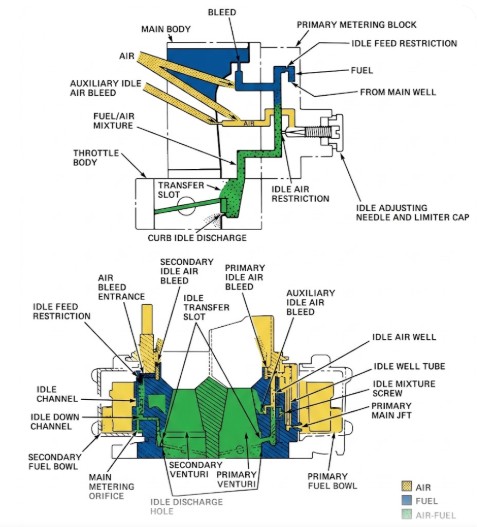
3. The "Two-Stage" Idle Air System
The 4180 features a unique Secondary Idle Air Bleed system (shown in your diagram).
-
Secondary Air Bleed Screw: Often found on the top or side of the main body, this screw allows air to bypass the throttle plates into the secondary bore.
-
The Symptom: if you cannot get the idle speed low enough even with the curb idle screw backed all the way out, the secondary air bleed may be open too far or the secondary throttle blades are not seating properly.
-
The Fix: Ensure the secondary throttle stop screw (accessed from the bottom of the carb) is set so the blades don't stick, but are nearly closed.
4. Common Failure Points
| Symptom | Probable Cause |
| Rough/Searching Idle | Clogged Idle Air Bleeds (the tiny brass orifices on top of the air horn). Clean with aerosol carb cleaner and compressed air. |
| Stalling when Stopping | Float Level too high or low. Fuel should just reach the bottom of the sight plug holes when the engine is level. |
| No response to Mixture Screws | Debris in the Idle Feed Restriction or the Idle Down Channel. This usually requires disassembling the primary metering block. |
| High Idle (unadjustable) | Fast Idle Cam sticking or the choke not fully disengaging. Also check for a warped base plate causing a vacuum leak. |
