
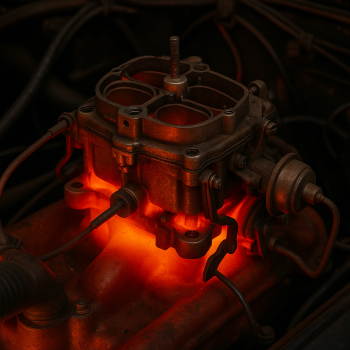
Experiencing hard restarts or fuel flooding after turning off your engine? If you’re running a Rochester 4 Jet (4GC) carburetor, you might be dealing with a common problem known as hot soak flooding. This issue occurs when heat builds up in the engine bay after shutdown, leading to excessive fuel vaporization and leaking into the intake.
Let’s break down the causes and how to fix them.
What Is Hot Soak Flooding?
Hot soak refers to the period immediately after the engine is shut off, when under-hood temperatures continue to rise due to the lack of airflow. On a carbureted engine, this can result in fuel boiling inside the float bowl or fuel passages, pushing liquid fuel into the intake manifold and flooding the engine.
Symptoms of Rochester 4 Jet Hot Soak Flooding
-
Strong fuel smell after shutoff
-
Hard restart when the engine is hot
-
Engine cranks but won’t start until it cools
-
Black smoke from the tailpipe on hot restarts
-
Rough idle or temporary stumble immediately after restarting
Common Causes of Flooding After Shutdown
1. Fuel Percolation Due to Heat Soak
-
The Rochester 4 Jet’s float bowl sits directly over hot intake runners.
-
Heat causes fuel to boil, forcing it through discharge nozzles and venturi openings.
Fix:
-
Use a phenolic spacer or insulator gasket under the carburetor to reduce heat transfer.
-
Shield the fuel line to prevent heat soak from radiating through the metal.
2. Worn Needle & Seat Assembly
-
Heat expansion and fuel boiling can overwhelm a worn or weak needle/seat.
-
This allows pressurized fuel to leak past and flood the carb throat.
Fix:
-
Install a high-quality ethanol-resistant needle & seat.
-
Ensure proper float height to avoid overfilling the bowl.
3. Excessive Fuel Pressure
-
Older 4 Jet carbs are designed for 4.5 to 5.5 PSI.
-
Modern mechanical and electric fuel pumps may push 6+ PSI, forcing fuel past the needle.
Fix:
-
Use a fuel pressure regulator set to around 4.5 PSI.
-
Test fuel pressure with a gauge at the carb inlet.
4. Improper Float Adjustment
-
If the float level is too high, the bowl overfills when fuel expands post-shutdown.
-
This results in leakage through the main discharge.
Fix:
-
Adjust the float height to factory specs — typically around 11/32" with the air horn inverted.
-
Ensure float drop is within spec too.
5. Leaking Main Discharge Check Ball
-
A worn or corroded discharge check ball can allow fuel to siphon into the intake when hot.
Fix:
-
Remove the venturi cluster. Inspect and reseat the check ball using a brass punch. Tap lightly so it doesn't get stuck.
-
Ensure the spring and “T” are reinstalled properly.
Preventive Tips
-
Use non-metallic carb spacers or heat shields.
-
Wrap fuel lines with thermal protection.
-
Avoid routing fuel lines over or near the manifold.
-
Consider ethanol-safe components in your rebuild kit. You can trust Mike's Carburetor Parts.
When a Rebuild May Be Necessary
If your Rochester 4 Jet still floods after hot shutdown despite these fixes, it may be time for a full rebuild. Internal residue from ethanol, varnish, or incorrect gaskets can restrict flow and cause recurring issues. Be sure to:
-
Use a high-quality rebuild kit from Mike's Carburetor Parts
-
Clean out all fuel and air passages thoroughly
-
Replace both floats and needle/seat if worn
Conclusion
Hot soak flooding is a common frustration with vintage carbureted engines, especially the Rochester 4 Jet. By addressing heat management, fuel pressure, float level, and worn components, you can eliminate hot restart problems and restore reliable performance.
