
One of the unique features of some versions of the 2150 was the High Altitude Compensator (HAC). As the name suggests, the HAC was designed to adjust the fuel mixture to compensate for changes in altitude. As altitude increases, air density decreases, which means there's less oxygen available to mix with the fuel in the combustion chamber. This can lead to a rich fuel mixture (too much fuel, not enough air) which can reduce performance, increase fuel consumption, and produce higher emissions.
The HAC works by sensing the change in barometric pressure that occurs with altitude. When it detects a decrease in barometric pressure (indicating an increase in altitude), it adjusts the fuel mixture to make it leaner. Conversely, if it detects an increase in barometric pressure (indicating a decrease in altitude), it adjusts the fuel mixture to make it richer.
In vehicles equipped with the Motorcraft 2150 and HAC, it's essential that the HAC is functioning correctly to ensure optimal engine performance and fuel efficiency, especially if the vehicle is driven in areas with significant changes in altitude.
Over time, like any other component, the HAC can wear out or become clogged, necessitating inspection, maintenance, or replacement. If you have or are considering a vehicle with this carburetor and are living in or traveling to high-altitude areas, it's a good idea to ensure the HAC is in good working order.

Some 2150, 2 barrel (later models) include a high altitude compensator.
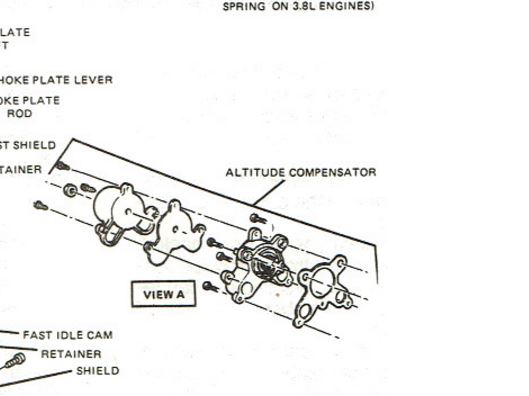 High altitudes can cause a carburetor to run rich. The high altitude compensator is used to improve high altitude emissions & engine performance by leaning out the air flow mixture. Air flow is controlled by a valve activated by an aneroid attached to the rear of the carburetor main body.