
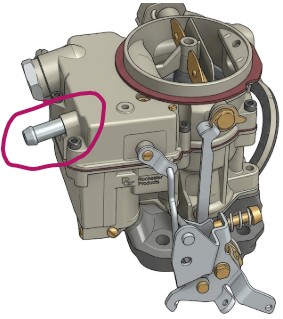
The bowl vent on a 2-jet carburetor, often found in automotive applications, serves a vital role in regulating air pressure within the carburetor's float bowl. Here's how it works:
-
Ventilation Path: The bowl vent typically consists of a small tube or passage that connects the float bowl to the atmosphere. This passage allows air to enter and exit the float bowl freely. It is usually positioned in such a way that it remains above the fuel level in the bowl. Later years 1970+ vented to the air cleaner or charcoal canister which allowed the fumes to be re-burned.
-
Pressure Regulation: As the engine runs and consumes fuel, the float bowl's fuel level decreases. This consumption creates a partial vacuum within the float bowl. Without a vent, this vacuum could impede the flow of fuel into the carburetor, disrupting the engine's operation.
-
Balancing Atmospheric Pressure: The bowl vent's primary function is to balance the air pressure inside the float bowl with the surrounding atmospheric pressure. By doing so, it ensures that there is no excessive vacuum or pressure within the float bowl.
-
Preventing Vapor Lock: Similar to the Holley 1904 carburetor, the bowl vent on a 2-jet carburetor helps prevent vapor lock. When the engine heats up, the fuel in the carburetor and fuel lines can vaporize, causing fuel delivery problems. The vent allows fresh air to enter the float bowl, reducing the risk of vapor lock by maintaining a consistent atmospheric pressure.
-
Steady Fuel Delivery: The consistent air pressure inside the float bowl ensures that the fuel metering and delivery to the engine remain stable. This is crucial for maintaining proper combustion and engine performance.
In summary, the bowl vent on a 2-jet carburetor maintains atmospheric pressure within the float bowl, preventing vacuum or pressure buildup. It helps ensure a steady flow of fuel to the engine, preventing issues like vapor lock and maintaining consistent engine performance.

What Happens If the Bowl Vent Gets Blocked Off?
If the Rochester 2 Jet float bowl vent gets blocked off, here’s what can happen:
1. Fuel Delivery Problems
-
The bowl vent allows air to escape as fuel enters the float bowl. If it's blocked, pressure builds up inside the bowl.
-
This can slow or stop fuel flow into the bowl, causing the engine to starve for fuel—especially under load or acceleration.
2. Erratic Fuel Level
-
Without proper venting, fuel may fill the float bowl inconsistently. You might see:
-
Lean condition at idle or cruise
-
Bogging or hesitation under throttle
-
Flooding if pressure forces fuel past the needle and seat
-
3. Vapor Lock or Fuel Boilover
-
A blocked vent can trap heat and vapor in the bowl.
-
This leads to fuel percolation (boiling), which forces raw fuel into the carburetor throat, causing:
-
Hard hot starts
-
Rough idle
-
Strong fuel smell
-
Stalling
-
4. Poor Idle and Tuning Behavior
-
The carb relies on a consistent fuel level. A blocked vent can cause the mixture to go lean or rich erratically, making idle mixture screws almost impossible to set correctly.
5. Pressure Build-Up Can Damage Internal Seals
-
The bowl isn't designed to be pressurized. Long-term vent blockage can stress gaskets, the needle/seat, and even crack castings.
Bottom Line
A blocked float bowl vent will cripple fuel metering and cause performance issues like hesitation, stalling, flooding, or hard starting. Always make sure the vent passage is clean and unobstructed—especially after media blasting or heavy varnish buildup.
